
The biggest remodel isn’t always the strongest resale investment. Garage door replacement stands out in the 2025 national Cost vs. Value Report, recouping 349.3% of its cost, while a midrange minor kitchen remodel recoups about 113% in 2026 data. For the best-ROI home renovations in the Portland area for 2026, CAS Construction & Renovations helps homeowners weigh those benchmarks against your home’s condition and the time you have before selling.
It’s natural to hope a major renovation will translate into a higher sale price, but resale value depends on more than the size of the project. The right improvements from CAS Construction & Renovations can refresh a home without overbuilding for its neighborhood, while a bathroom remodel’s cost recovery can differ from project to project.
This guide highlights improvements with strong resale benchmarks, explains how to prioritize work by budget and timeline, and breaks down what affects bathroom remodel cost recovery. You’ll get a practical way to compare projects, consider what Portland buyers may notice, and focus your plans on updates that make sense for your home.
Key Takeaways
- Compare likely resale recovery with the project’s scope, rather than assuming the largest remodel will deliver the greatest return.
- Set priorities around your selling timeline: quick cosmetic improvements and larger renovations serve different goals.
- Bathroom remodel cost recovery depends on factors such as the work’s scale and how well the finished space fits the home.
- Use neighborhood comparables and buyer-facing condition to guide upgrades, so your plans improve the home without overbuilding for the area.
1. Which Home Improvements Add the Most Resale Value?
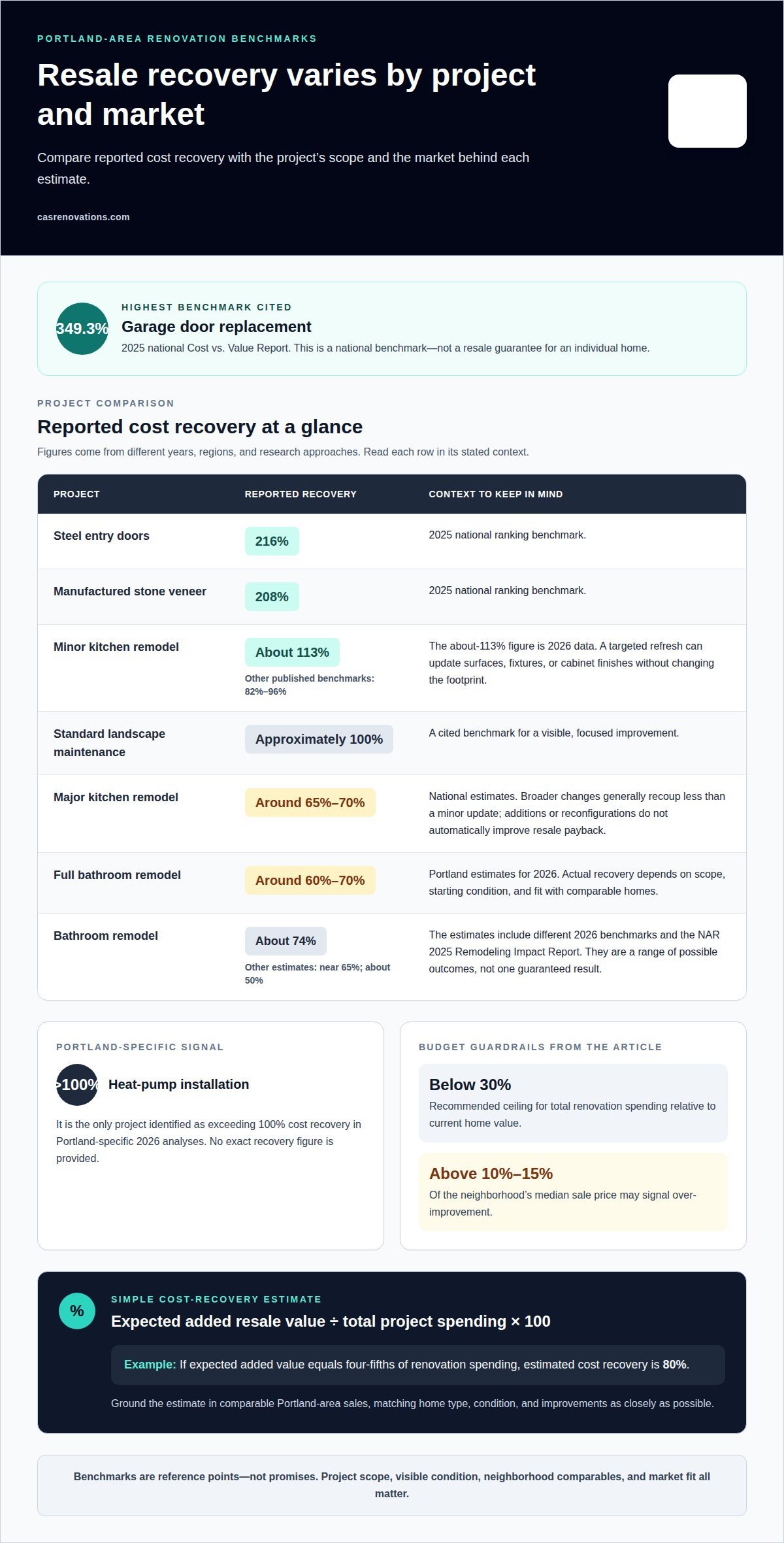
For resale, a minor kitchen remodel can be a strong choice when the layout still works. The 2026 data places its cost recovery at about 113%, while other published benchmarks range from 82% to 96%. These figures differ, so treat them as guides rather than a promise about your Portland home. Buyers often notice a clean, functional kitchen, and replacing worn finishes can refresh it without changing its footprint.
Scope matters. A minor update focuses on targeted changes, such as refreshed surfaces, fixtures, or cabinet finishes. A major kitchen remodel changes more of the room and generally recoups less: national estimates put major remodel recovery around 65% to 70%. An addition or extensive reconfiguration may suit a home’s needs, but it doesn’t automatically improve resale payback.
Bathroom updates follow a similar pattern. Targeted improvements can address dated finishes or visible wear, while a full remodel involves a broader transformation. Portland estimates place full bathroom remodel recovery around 60% to 70% in 2026. The actual result depends on the project’s scope, condition, and how well the finished room fits comparable homes.
For federal tax credits, no: according to the Internal Revenue Service, the Energy Efficient Home Improvement Credit and the Residential Clean Energy Credit expired on December 31, 2025. Oregon rebates are separate from those federal credits, so their expiration doesn’t determine whether a particular Oregon program applies.
Estimate payback by dividing expected added resale value by total project spending, then multiplying by 100. If the expected added value equals four-fifths of the renovation spending, estimated cost recovery is 80%. Ground that estimate in comparable Portland-area sales, matching home type, condition, and improvements. Then weigh the kitchen or bathroom work against what buyers see in those nearby homes.
2. Improvements prioritized by selling timeline and budget
Start with the sale date and the home’s visible condition. If listing soon, prioritize focused improvements buyers can see, such as landscaping, paint, or worn flooring. A standard landscape maintenance project recovers approximately 100% of its cost in the cited benchmark. With more time, compare a minor kitchen update, including cabinet refreshes, with larger projects that can disrupt daily use. This helps narrow the best ROI home renovations for 2026 in the Portland area to work suited to your plans.
Selling as-is can make sense when renovations would strain your budget or delay a listing. Separate visible defects from optional upgrades, then consider whether each change addresses a concern or improves buyer appeal. A kitchen remodel or bathroom update won’t automatically increase value. The decision depends on the home’s condition and nearby comparable sales.
Keep total renovation spending proportionate to current home value and neighborhood prices. The guidance recommends staying below 30% of current home value; budgets exceeding 10-15% of the neighborhood’s median sale price may signal over-improvement. In 2025 rankings, garage door replacement recouped 349.3%, steel entry doors 216%, and manufactured stone veneer 208%. These are national benchmarks, not promises for individual homes.
For 2026 Portland cost-versus-value estimates, heat-pump installation is the only project identified as exceeding 100% cost recovery in Portland-specific analyses. Regional estimates for siding and window replacement vary, so consider them as potential curb-appeal or maintenance projects rather than guaranteed resale gains. The best ROI home renovations in the Portland area for 2026 depend on project scope and market fit, so treat these as reference points, not a single ranking.
Replacing worn siding or windows can improve curb appeal, while roof work may matter if visible wear affects buyer confidence. Portland permit and building-code requirements depend on the project’s scope and location. Identify proposed work early and account for any applicable review in your schedule. Home age, weather exposure, and seismic concerns can also inform priorities. Base decisions on the home’s condition, addressing maintenance needs before cosmetic additions.
3. Bathroom remodel cost recovery
Bathroom resale payback depends on the project’s scope, starting condition, and fit with the home. A mid-range remodel is estimated to recover about 74% of its cost at resale, while another 2026 benchmark places its return near 65%. The NAR 2025 Remodeling Impact Report estimated roughly 50% cost recovery for a bathroom renovation. These benchmarks use different research approaches, so they describe a range of possible outcomes, not a single guaranteed result.
For a clearer estimate of the work involved, divide it into necessary repairs, functional improvements, and finish upgrades. A leaking fixture or damaged surface may affect buyer confidence differently from a purely decorative change. Improvements to storage, lighting, or everyday use can strengthen appeal, while a costly redesign may add features buyers in the neighborhood value less. Prioritize changes that solve visible problems and make the room feel cohesive.
Estimate recovery with a simple comparison: divide the resale value you expect the work to add by the project’s total cost, then multiply by 100. If added value equals three-quarters of spending, the estimated cost recovery is 75%. Use comparable homes to shape that resale estimate, matching the bathroom’s condition, size, and finish level as closely as possible. Keep project scope clear, since changing layouts or adding features can shift both the investment and likely buyer appeal.
A measured approach can still deliver a meaningful improvement. First, address functional needs, then choose durable finishes and a consistent style that suits the rest of the home. For example, updating worn surfaces while keeping a workable layout avoids expanding the project without a clear resale reason. A bathroom should feel well cared for and practical, not like an expensive upgrade out of step with the kitchen or other rooms.
Cost recovery is only one measure of value. A well-planned remodel can improve daily comfort and make it easier for buyers to picture themselves in the home. Weigh that benefit against the project scope, comparable sales, and the room’s existing condition before committing.
4. Choosing projects to match neighborhood and selling timeline
Begin with a simple sequence: note the listing timeline, identify visible maintenance issues, then compare planned upgrades with nearby homes. Portland Metro homes spent roughly 79 days on the market in March 2026, so listing plans need room for project work and preparation. A garage or exterior improvement may help curb appeal, but the highest-return option on paper may not address your home’s most noticeable needs.
Before selling, prioritize repairs that affect function or signal neglect. Fix sticking doors, damaged flooring, and obvious leaks before choosing decorative changes. In 2024, 20% of sellers replaced or repaired carpet and flooring before listing. That kind of targeted work can make rooms feel cared for without committing to a full remodel. The 2025 Remodeling Impact Report also found that half of realtors recommend painting the entire home before listing.
Selling as-is may suit homeowners when renovations would delay a move or exceed what comparable properties support. Others may find that focused maintenance and modest upgrades make the home easier to present. Avoid major layout changes or premium finishes that lift the property beyond the neighborhood’s usual level. Compare similar homes by condition, size, and features, then focus spending on differences buyers are likely to notice.
Landscaping is another practical step. A standard landscape maintenance project recovers approximately 100% of its cost in the cited benchmark, while mature trees can support higher appraisals than comparable treeless lots. Trim overgrowth, clear paths, and make the entry visible. These improvements strengthen curb appeal without requiring a broad interior renovation.
Use this order to keep the plan grounded: address essential repairs, refresh high-visibility areas, then consider larger projects only when comparable sales support them. For a coordinated plan across several rooms, map out your pre-sale renovation project around the home’s condition, neighborhood, and timeline.
CAS Construction & Renovations: Entire-Home Renovations
CAS Construction & Renovations helps homeowners plan connected updates when resale priorities span several rooms. A Whole-Home Renovation can bring the project scope, finishes, and work sequence into one coordinated plan, rather than treating every improvement as a separate decision.
For a focused project, Kitchen Remodeling or Bathroom Remodeling can address a room that needs better function or a refreshed appearance. Outdoor Living & Hardscaping can improve the home’s exterior presentation. The right starting point depends on your home’s condition, selling timeline, and which improvements make sense for the neighborhood.
If you’re weighing updates across your home, contact CAS Construction & Renovations to discuss your renovation plans.
Make Your Next Improvement Plan Count
The best-ROI home renovations in the Portland area for 2026 begin with a clear decision: what should your home do better for you now, and what would make it more appealing to a future buyer? Let those priorities guide the scope, finish choices, and timing. A renovation can support resale while also making the home more functional and enjoyable in the meantime.
Before moving forward, bring your ideas together in a plan that accounts for the home’s condition and your goals. This gives each decision a purpose and helps keep the work cohesive, rather than letting separate upgrades compete for attention. A thoughtful plan is a practical next step, whether you’re preparing to sell or improving a home you expect to enjoy longer.
Discuss your renovation plans with CAS Construction & Renovations, and take the next step with a clear direction for your home.
Frequently Asked Questions
Which Home Improvements Add the Most Resale Value?
Exterior replacements lead several published resale-return rankings, though national figures don’t predict an individual Portland home’s result. The 2025 Cost vs. Value Report puts garage door replacement at 349.3% cost recovery and steel entry door replacement at 216%. Treat rankings as a way to compare project types, then weigh condition, buyer appeal, and how well each improvement fits nearby homes.
Is it better to remodel my Portland home or sell it as-is in 2026?
Selling as-is may be the better choice if the home is functional and renovations would add little beyond disruption. If visible wear, damaged finishes, or an awkward room detracts from the home, targeted work could improve its presentation. Compare the proposed work with similar homes and your moving timeline. A project is more compelling when it addresses a clear issue instead of adding finishes solely for resale.
What does Portland’s 2026 market actually reward?
Portland-area buyers often look for homes that feel well maintained, functional, and consistent with neighborhood expectations. Market figures alone don’t identify the right remodel. Focus on the condition and features that distinguish comparable homes in your part of the metro.
What low-cost cosmetic fixes give the best bang for the buck before listing in Portland?
Start with visible, contained work: touch up scuffed paint, clean the entry, trim overgrown plants, and replace visibly worn flooring where needed. The 2025 Remodeling Impact Report says half of realtors recommend painting the entire home before listing. Choose neutral, consistent finishes and address distracting defects first. A fresh appearance can help buyers focus on the rooms rather than unfinished maintenance.
Which home renovations have the highest resale return on investment in 2026?
Published rankings place exterior projects among the strongest performers, but the leading category varies by region and report. The 2025 Cost vs. Value Report lists garage door replacement at 349.3% recovery; its 2026 Portland-focused analysis identifies heat-pump installation as the only project exceeding 100%. Compare the project’s relevance to your property, since a high ranking doesn’t mean it solves your home’s main buyer-facing issue.
How do Portland-area renovation costs and ROI compare with national averages?
Portland and national estimates use different project scopes, so compare like with like rather than treating them as a direct price or return match. A Portland-area analysis estimates fiber-cement siding replacement at 114% recovery, while national rankings report different returns for projects such as garage door replacement. Actual project spending depends on the home, materials, and work involved; broad averages can’t establish an individual project’s cost.