

The biggest remodel isn’t always the one that adds the most value. Landscaping can improve a home’s first impression, while thoughtful updates inside can make it more functional and well cared for. Knowing how to increase home value with remodeling starts with choosing improvements that suit the property and appeal to likely buyers.
Visible changes matter: tidy outdoor spaces and fresh curb appeal can make a home feel inviting before buyers step inside. But the right investment depends on more than appearance. Condition, quality, and how well the project fits the rest of the home matter, too.
This article looks at how landscaping, bathroom updates, curb appeal, and kitchen remodeling can affect a home’s appeal and value. It also explains why modest, well-planned improvements may be a more considered choice than a major transformation, and what to weigh before deciding where to focus.
Key Takeaways
- Prioritize improvements that add useful living space, while considering how a conversion could affect the home’s bedroom count and appeal.
- Bathroom updates can improve function and presentation; the scope of work matters when weighing a refresh against a larger remodel.
- Landscaping and exterior details shape curb appeal, so focus on a cohesive, well-maintained look that complements the home.
- Minor kitchen updates can refresh the room without the scale of a full overhaul; thoughtful cabinet improvements may help create a more polished result.
1. What Kind of Home Improvement Projects Will Add Value to My Home?
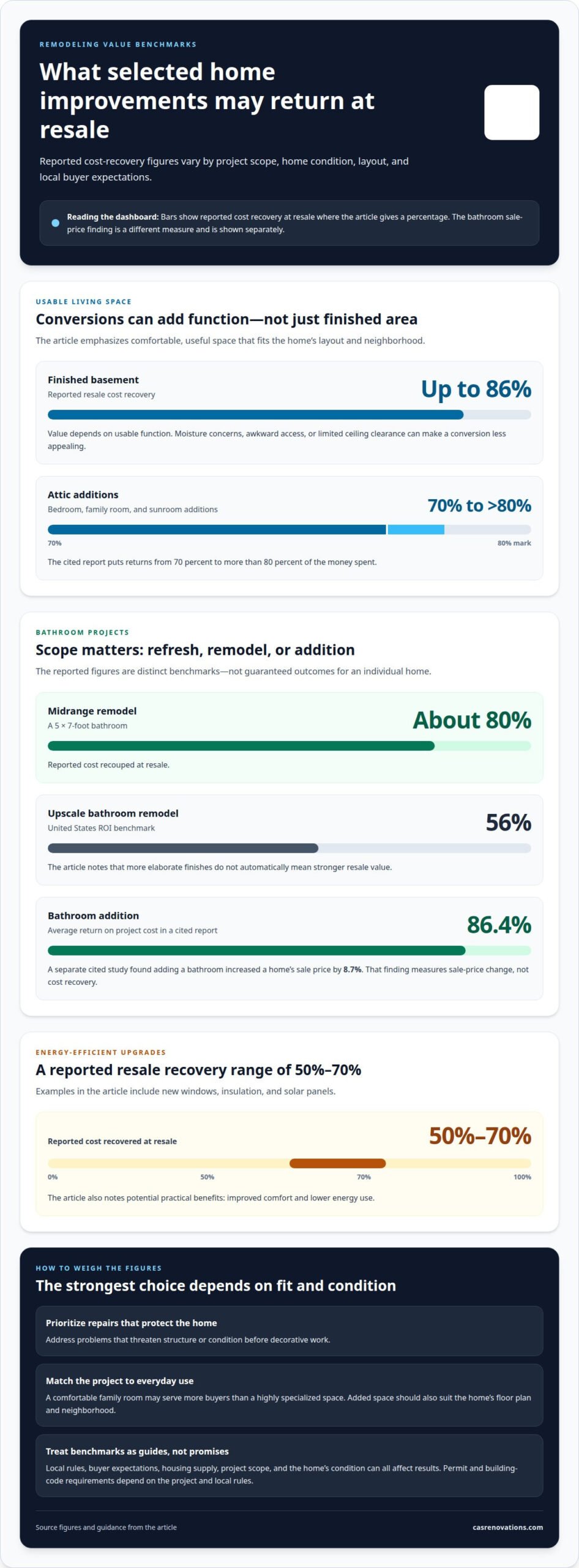
Basement finishing can turn underused space into a family room, guest area, or flexible living space. A finished basement can return up to 86% of its investment at resale. The value comes from usable space, not simply a larger finished area. Moisture concerns, awkward access, or limited ceiling clearance can make a conversion less appealing. Addressing problems that threaten the home’s structure should come before decorative work.
Basement conversion costs depend on the existing space, required repairs, layout, and finish choices. Resale value also reflects how the added room suits the neighborhood and the home’s overall floor plan. Compare the project’s scope with the function it adds: a comfortable family room may serve more buyers than a highly specialized space. The 86% return figure is a benchmark, not a promised result for every basement or market.
Attic conversions can add another kind of usable space. Attic bedroom, family room, and sunroom additions returned from 70 percent to more than 80 percent of the money spent in a cited report. Before selling, prioritize repairs and improvements that support the home’s condition and everyday function. Examples include addressing worn siding or updating dated countertops, rather than removing a bedroom for a larger closet. Whether to remodel or sell as-is depends on the work needed, the home’s current condition, and the appeal of its existing layout. A focused update can make sense; extensive work may not.
Permits and building-code requirements can apply to remodeling, particularly when a project changes the structure or building systems. The applicable requirements depend on the project and local rules. Energy-efficient upgrades, including new windows, insulation, and solar panels, typically recover 50% to 70% of their cost at resale. Their value can also come from improved comfort and lower energy use. For any renovation, weigh the investment against practical benefits, the home’s condition, and buyer expectations, rather than assuming the largest project will deliver the strongest return.
2. Bathroom refreshes and mid-range remodels
A bathroom refresh can improve daily function without changing the room’s footprint. Focused updates to worn finishes, storage, and fixtures can make the space feel cleaner and more cohesive. A midrange remodel of a 5×7-foot bathroom recoups about 80% of its cost at resale. An upscale bathroom remodel, by comparison, has a 56% return on investment in the United States. These figures show why scope matters: more elaborate finishes do not automatically mean stronger resale value.
Local results vary with buyer expectations, housing supply, and the condition of nearby homes. Where buyers value updated bathrooms, a practical refresh may be received differently than in an area where homes commonly need substantial work. Neighborhood demand also shapes resale returns. Remodeling impact reports offer broad benchmarks, but a home’s layout, condition, and finish level determine how relevant those comparisons are.
Adding a bathroom can address a real functional gap, especially when the existing layout creates congestion. One cited study found that adding a bathroom increased a home’s sale price by 8.7%; another report put the average return for bathroom additions at 86.4% of their cost. These are separate measures, not a promise of a specific result. Adding living space or a bathroom makes the most sense when it improves the home’s usability and fits its overall design.
Minor kitchen and bathroom remodels benefit from a clear scope. In the kitchen, coordinated cabinet finishes and countertops can refresh the room without requiring a full layout change. In the bathroom, updating tired surfaces while preserving a functional arrangement keeps attention on the improvements buyers can readily see. If you’re weighing a bathroom update, bathroom remodeling planning can help shape a cohesive scope around the room’s needs.
4. How Can a Remodeling Contractor Improve Your Home’s Curb Appeal?
Buyers form an impression before they reach the front door. A remodeling contractor can assess the exterior as a connected composition, including the entry, siding, walkways, and outdoor areas. Replacing a weathered entry door or repairing damaged siding can make the facade feel cared for. Coordinated finishes matter: a striking new door may look out of place beside neglected trim or an uneven path.
Landscaping adds structure to that first impression. Hardscaping, such as a defined walkway or patio, can work alongside planting areas and the home’s architecture. Low-maintenance choices help keep the exterior orderly without making the yard feel bare. For example, a clear route from driveway to entry, paired with tidy planting beds, makes the approach easier to understand and use.
Luxury features don’t automatically appeal to every buyer. A custom outdoor feature may suit one household but feel like extra upkeep to another. Improvements make more sense when they support everyday use and complement the home and neighborhood. A practical seating area or well-planned path may serve a broader purpose than an elaborate feature shaped around one owner’s preferences.
Sequence also matters. First, address visible wear, such as peeling paint, damaged siding, or a worn entry. Next, bring the walkway, lighting, and landscaping into visual balance. Then consider larger exterior renovations if they resolve a clear condition or function issue. The same principle applies inside: polished floors and coordinated appliances can strengthen the overall impression, but they won’t compensate for an exterior that appears neglected. A contractor’s role is to connect these improvements into a coherent plan, so the entry, exterior, and outdoor spaces feel intentional rather than assembled from unrelated upgrades.
4. Minor kitchen remodels and cabinet updates
A minor kitchen remodel can refresh a room without changing its footprint. In one cited study, minor kitchen remodels recouped 92.9% of their cost at resale, while a major midrange upscale kitchen overhaul recouped about 51%. These figures suggest that a focused scope may be worth considering before planning a more extensive renovation. For homeowners weighing how to increase home value with remodeling, preserving what works while improving dated or awkward features is a practical starting point.
Cabinets shape much of a kitchen’s appearance. A cohesive plan can coordinate cabinet finishes with countertops, backsplash, flooring, and existing appliances. If the cabinet boxes remain sound, refinishing or replacing doors may update the look without replacing the entire system. If storage or layout creates daily frustration, the project can address function as well as appearance.
Begin by identifying what feels dated or difficult to use, then group related improvements into one clear scope. Updated cabinet fronts, better storage, and a durable countertop, for example, can make the room feel more consistent. Replacing appliances may suit a design that currently feels mismatched. Energy-efficient choices can support lower energy use, though resale appeal depends on the home and buyer priorities.
More work doesn’t automatically make a better investment. A major renovation may introduce finishes or features that exceed the home’s style. A focused project can improve condition, storage, and visual consistency without adding unnecessary maintenance. Average returns are benchmarks, not forecasts for every property; neighborhood expectations, workmanship, and the kitchen’s starting condition all matter. A thoughtful plan for how to increase home value with remodeling keeps decisions tied to practical needs and broad buyer appeal.
For a considered plan, discuss a kitchen remodeling project focused on the updates that matter most.
CAS Construction & Renovations: Entire-Home Renovations
CAS Construction & Renovations can bring related improvements together through Whole-Home Renovations. This is a natural next step when updates span several rooms or the home needs a consistent plan rather than isolated projects.
For a focused scope, Kitchen Remodeling or Bathroom Remodeling can address specific spaces. Outdoor Living & Hardscaping can shape how the home connects with its yard. The right direction depends on which areas need attention and how the planned changes work together. A coordinated approach can align finishes, function, and the overall feel of the home.
If you’re considering a broader renovation or a targeted update, contact CAS Construction & Renovations to discuss your project.
Make Your Next Improvement Count
Before planning work, decide what you want the home to do better for current residents and future buyers. A clear priority keeps decisions focused: improve an awkward layout, refresh a tired room, or make the transition between home and yard more useful. That purpose gives each design choice a practical measure, rather than letting individual upgrades compete for attention.
Thinking about how to increase home value with remodeling also means weighing resale appeal alongside comfort and long-term upkeep. Kitchen, bathroom, and outdoor projects can each support a different goal, so start with the area that most needs a thoughtful change. A well-defined scope makes it easier to discuss materials, finishes, and how the work should fit the home as a whole.
When you’re ready to discuss the next step, contact CAS Construction & Renovations. A considered plan can help you move forward with clarity and confidence.
Frequently Asked Questions
Does landscaping increase home value?
Landscaping can improve buyer appeal by making outdoor areas feel cared for and usable. A defined entry path, tidy planting beds, and a clear connection between patio and yard can make the property easier to appreciate. The strongest choices suit the home’s style without creating an elaborate upkeep burden. Their contribution depends on the property and how the outdoor space fits the neighborhood.
What Kind of Home Improvement Projects Will Add Value to My Home?
Projects that improve condition, function, or usable space can support value. Examples include finishing an underused area, updating a dated kitchen, or correcting a layout issue that complicates daily routines. Start by identifying the home’s most noticeable limitation, then prioritize work that addresses it without adding features that feel out of place. A cohesive result matters more than upgrades without a clear purpose.
How Can a Remodeling Contractor Improve the Curb Appeal of My Home?
Exterior improvements work best when the entry, hardscape, and outdoor areas feel connected. For example, a refreshed front approach can coordinate the walkway, planting beds, and entry finishes rather than treating each as a separate project. That coordination helps create a deliberate first impression. CAS Construction & Renovations plans Outdoor Living & Hardscaping around how the property is used.
What determines if a renovation will add value to your home?
A renovation’s value depends on its usefulness, workmanship, and fit with the home and neighborhood. Buyers may respond differently to a flexible room than to a space designed for one specific hobby. Existing condition matters, too: correcting a persistent functional shortcoming can be more meaningful than adding decorative finishes alone. A well-defined scope keeps design choices aligned with the project’s purpose.
Which remodeling projects add the most resale value to a home?
There isn’t one project that leads in every home or market. A targeted kitchen update, a functional bathroom improvement, or a well-planned addition may appeal when it addresses a clear need. Exterior work can also strengthen a home’s first impression. Consider which change would make the property more useful to a range of buyers, rather than choosing solely by project size or appearance.
Do bathroom remodels increase home value, and how much do they typically cost?
Bathroom remodeling can support home value when it improves the room’s function and condition. The cost depends on the scope, material selections, layout changes, and existing conditions, so a general figure may not reflect a specific project. CAS Construction & Renovations provides free, no-obligation estimates. Homeowners in Beaverton, Tigard, Lake Oswego, Hillsdale, Hillsboro, and West Linn can discuss bathroom remodeling for their home.