

Choosing the lowest bid for your Beaverton home renovation isn’t a savings strategy; it’s often a down payment on future stress. Most homeowners in Washington County feel a sense of dread when they look at a project quote, fearing that scope creep or hidden permit costs will turn a dream kitchen into a financial burden. It’s natural to feel anxious about the high cost of living and labor in Oregon, especially when quoting methods vary so widely between contractors. Understanding residential remodeling project fees is the first step toward reclaiming control over your home’s transformation.
We’re here to help you navigate these complexities with the steady confidence of a seasoned craftsman. This guide will demystify the financial side of your renovation by breaking down exactly where your money goes, from local design requirements to professional project management. You’ll learn how to distinguish between different contract models, understand the latest 2026 permit trends in Beaverton, and gain the confidence to choose a partner based on long-term value rather than just the initial bottom line.
Key Takeaways
- Learn why local Oregon labor rates and 2026 supply chain shifts play a larger role in your budget than material costs alone.
- Discover the critical differences between fixed-price and cost-plus contracts so you can choose the model that offers the most financial peace of mind.
- Gain a clear understanding of how residential remodeling project fees cover essential “invisible” services like professional project management and CCB-licensed overhead.
- Identify the hidden expenses of renovation, including local Beaverton permit fees and the necessity of a 10-15% contingency fund.
- Understand why prioritizing craftsmanship and local expertise over the lowest bid protects your home’s long-term resale value and prevents costly rework.
The Architecture of Remodeling Costs in the Portland Metro Area
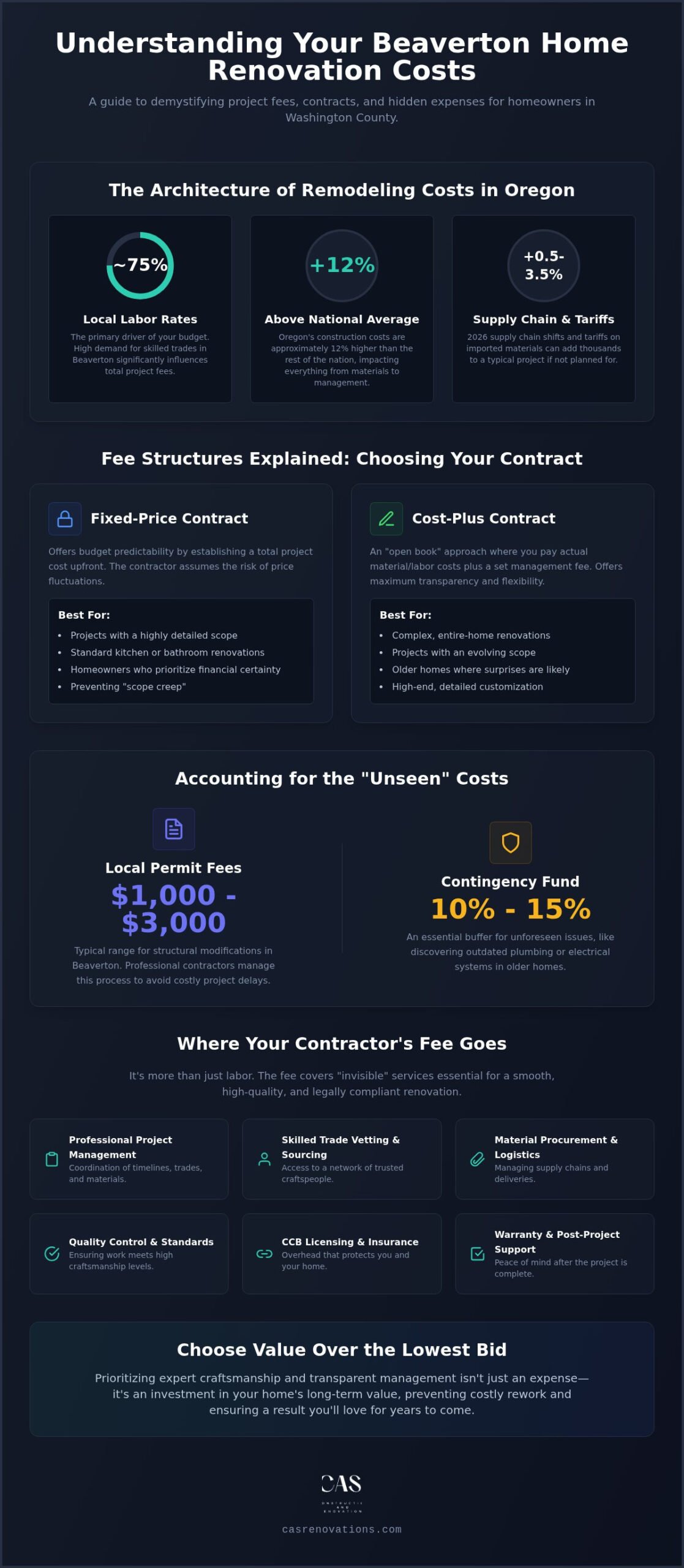
National estimates often fall short when applied to the specific economic climate of the Pacific Northwest. While material prices fluctuate globally, local labor rates in Oregon consistently exert the most significant influence on residential remodeling project fees. Skilled trade demand in Beaverton remains high, and because Oregon’s construction costs sit approximately 12% above the national average, the “human element” of your project—the expertise and time required—is the primary driver of your budget.
Supply chain trends in 2026 have introduced new variables to residential remodeling project fees as well. Current tariffs on imported materials can add between 0.5% and 3.5% to a total project cost. For a typical kitchen renovation, this might translate to several thousand dollars in unexpected expenses if not planned for correctly. This is part of a broader evolution within the home improvement industry, where logistics and specialized labor now dictate the pace and price of high-end work.
The specific “bones” of your house also play a role in the final calculation. Many Beaverton neighborhoods feature 1970s split-levels or mid-century builds that require modernizing to meet current safety standards. Structural fee variables often arise when opening up walls to find outdated electrical or plumbing systems that don’t align with today’s open-concept trends. We call this the “craftsmanship premium.” It isn’t just about the finish; it’s about the precision required to integrate new luxury into existing structures reliably.
Regional Labor and Material Drivers
Washington County is currently seeing a high demand for specialized trades, which directly affects project scheduling. When skilled labor is at a premium, management fees reflect the effort needed to coordinate a seamless timeline. Sourcing materials locally whenever possible helps mitigate some 2026 logistics risks, but the correlation between project duration and management fees remains steady. A longer, more complex project requires more oversight to ensure the result meets our standards for aesthetic harmony and longevity.
Local Regulatory and Permitting Factors
Navigating the municipal requirements of Beaverton and Tigard is a specialized task. Permit fees for structural modifications in a kitchen remodel typically range from $1,000 to $3,000 locally. Professional contractors include permit procurement in their fee structure because managing these timelines is critical to avoiding costly delays. Additionally, maintaining an active CCB license, like #206522, ensures that your project adheres to Oregon’s strict safety codes. This protects your investment and your home’s future resale value by ensuring every update is legal and documented.
Fee Structures Explained: Fixed-Price vs. Cost-Plus Contracts
One of the most significant decisions you’ll make alongside your contractor is how to structure your contract. This choice dictates how financial risks are shared and how residential remodeling project fees are billed throughout the construction process. Most high-end renovations in the Portland metro area fall into two categories: fixed-price or cost-plus. Both models aim to provide a fair exchange of value, but they offer different levels of flexibility and predictability.
Fixed-Price: The Value of Budget Predictability
The fixed-price model is often the preferred choice for homeowners who prioritize financial certainty. In this structure, we provide a total cost for the project based on a highly detailed scope of work. It moves the risk of material price spikes or labor delays from your shoulders to ours. For a standard kitchen or bathroom renovation in West Linn, this predictability is invaluable — and homeowners researching the kitchen remodel cost West Linn residents face in 2026 will find that locking in a fixed price early is one of the most effective ways to protect their budget. It prevents the anxiety of “scope creep” because every tile choice and fixture is selected before the first hammer swings. Because this model requires intensive upfront design, it ensures that your vision is fully captured on paper before construction begins.
Cost-Plus: Flexibility for High-End Customization
In contrast, the cost-plus model is an “open book” approach that offers maximum transparency. You pay for the actual cost of materials and labor, plus a set management fee that covers our expertise, coordination, and overhead. This is often the ideal path for complex entire-home renovations where the full scope might evolve as we uncover the history of an older home. It allows for high-end customization without the need to finalize every single detail on day one. You see every receipt and invoice, which builds an atmosphere of mutual trust and ensures you only pay for exactly what goes into your home.
Choosing the right structure depends on the complexity of your goals. While a fixed-price contract offers a shield against market volatility, a cost-plus agreement provides the agility needed for large-scale outdoor living projects or custom builds. With over 20 years of industry experience, we help you weigh these options to ensure your residential remodeling project fees align with your long-term goals. We believe that clarity in the contract is the foundation of a successful partnership, ensuring that the final result is as rewarding as the planning process itself.
Breaking Down the Contractor’s Fee: Where Does the Money Go?
When homeowners see a line item for a contractor’s fee, it’s easy to view it as a simple administrative surcharge. In reality, this fee represents the professional framework that keeps your home safe and your budget intact. These residential remodeling project fees fund the specialized infrastructure required to transform a complex design into a finished living space without the common pitfalls of unmanaged labor. It’s the engine that drives the entire process, and many professional firms rely on JobCost Genius for the specialized bookkeeping needed to ensure every dollar you spend on materials and labor is utilized with maximum efficiency.
Think of project management as the “brain” of the entire operation. It involves daily site supervision to ensure that every structural modification and finish detail aligns with the original architectural vision. By meticulously managing the renovation project timeline, we prevent the cascading delays that often occur when specialized trades like plumbers and electricians aren’t perfectly synchronized. This proactive oversight catches potential errors before they become permanent fixtures, saving you from the frustration of rework. Clear communication and regular reporting ensure you’re never left wondering about the status of your home.
A significant portion of our role involves the vetting and management of subcontractors. We maintain a network of trusted tilers, electricians, and plumbers who meet our high standards for precision and reliability. Coordinating these experts requires a deep understanding of Oregon building codes and the technical requirements of high-end materials. We handle the scheduling, quality control, and payment for every trade on-site, providing you with a single point of accountability and a sense of calm reliability.
Insurance and Liability Coverage
Operating reliably in the Oregon construction market requires a commitment to rigorous safety and legal standards. A portion of your project fee covers comprehensive liability insurance and workers’ compensation. While “cheap” contractors often cut corners here, this coverage is what protects your home and personal assets if an accident occurs on your property. It’s a layer of security that ensures a steady confidence throughout the build. Your fee pays for the peace of mind that comes from knowing your property is in professional hands.
Maintaining an active CCB license, such as our CCB #206522, isn’t just a regulatory requirement; it’s a promise of professional integrity. This compliance ensures that your investment is backed by a business that operates with accountability and respect for local standards. Finally, a reasonable profit margin is essential for the longevity of the partnership. A profitable contractor is a stable contractor who will be there to honor your long-term warranty. This financial stability is a form of insurance for you, guaranteeing that we’ll be available to support your home long after the residential remodeling project fees have been settled.
Accounting for the “Unseen”: Permits, Design, and Contingency
While it’s easy to focus on the tangible beauty of new quartz countertops or custom cabinetry, a significant portion of residential remodeling project fees covers the essential work that happens before a single wall is opened. These “unseen” costs are the foundation of a successful renovation. They ensure that your home remains structurally sound and legally compliant throughout its transformation. Skipping these steps often leads to expensive rework or issues during a future home sale.
Design and Pre-Construction Fees
Professional drawings are more than just a visual aid; they are the roadmap for every trade on your site. Interior design fees focus on aesthetic harmony and functional flow, while structural engineering costs cover the load-bearing calculations required for open-concept living. A critical part of this phase is “Discovery,” where we investigate the current state of your plumbing and electrical systems. This thoroughness is why high-quality kitchen remodel estimates are rarely free. A “free estimate” often lacks the depth required to identify potential issues, leading to surprise bills later. Investing in quality planning upfront protects your budget from the start.
Permit fees are another essential variable. In Beaverton and Hillsboro, permits for structural modifications, electrical work, and plumbing in a kitchen remodel typically range from $1,000 to $3,000. These fees fund the municipal inspections that verify your project meets current safety standards. We handle the entire procurement process to ensure your renovation is documented correctly with Washington County officials.
The 10-20% Rule and Structural Surprises
Every smart budget includes a contingency fund of 10% to 20% of the total project cost. This isn’t extra profit for the contractor; it’s a safety net for what lies behind the walls. Older Oregon homes, particularly those built in the 1970s or earlier, often hide outdated wiring, dry rot, or non-compliant plumbing. When we uncover these issues, the contingency fund allows us to address them immediately without derailing the entire project. It provides a sense of calm reliability, knowing that a structural surprise won’t become a financial crisis.
Navigating Change Orders
A change order is a homeowner-requested deviation from the original contract. It’s important to distinguish these from contractor errors, which should never result in additional residential remodeling project fees. Valid change orders occur when you decide to upgrade a material or add a new feature mid-build. We document every change with a written agreement to ensure everyone is aligned on the new cost and timeline. This transparency keeps your budget under control and maintains the atmosphere of mutual trust we value. If you’re ready to start your project with a transparent and realistic budget, reach out to us today to schedule a professional consultation.
Choosing Value Over Price: The CAS Construction & Renovations Approach
The temptation to select the lowest bidder is understandable, especially given that Oregon’s general construction costs sit about 12% higher than the national average. However, a low initial quote often masks a lack of comprehensive planning or inadequate insurance coverage. In the construction industry, the lowest bid is frequently the most expensive in the long run because it leads to unexpected change orders, technical delays, and subpar craftsmanship. At CAS Construction & Renovations, we believe that residential remodeling project fees should be viewed through the lens of long-term value and structural integrity.
Our approach is built on over 20 years of industry experience. We’ve seen firsthand how meticulous project management reduces waste and optimizes your budget by getting things right the first time. This expertise allows us to provide a sense of calm reliability throughout the build. We treat your property with the same respect as our own, ensuring that every detail meets our standards for precision and aesthetic harmony. By prioritizing quality craftsmanship in home remodeling over the initial bottom line, we protect you from the stresses typically associated with large-scale home projects.
The CAS Transparency Guarantee
Transparency is the bedrock of mutual trust between a homeowner and a contractor. We provide detailed line-item estimates that eliminate guesswork and show exactly how your funds are being allocated. By utilizing a local network of vetted subcontractors in Tigard and Hillsdale, we ensure that every specialist on your project is a proven expert. This coordination is particularly vital when we manage bathroom renovations, where specialized tiling and plumbing work are essential to maximizing your return on investment. Our goal is to provide a clear, predictable path from the first design to the final walkthrough.
Investing in Your Home’s Future
Remodeling is more than a home improvement; it’s a strategic investment in your family’s future. For example, mid-range kitchen remodel cost West Linn data shows that well-planned projects in the area typically see an ROI of 55% to 75%, while minor cosmetic updates can return even more. By balancing residential remodeling project fees with home value appreciation, we help you make decisions that benefit your lifestyle today and your resale value tomorrow. There’s an underlying peace of mind that comes with working with a locally owned and operated craftsman who understands the specific needs of Washington County homes.
Choosing a contractor is about finding a guide who can navigate the complexities of Oregon building codes and modern design trends with ease. We project the image of a trusted partner who knows exactly how to manage expectations and deliver on promises. If you’re ready to transform your space with a team that values integrity and accountability, the next step is simple. Contact CAS Construction & Renovations for a professional estimate and let’s begin the conversation about your home’s potential.
Building Confidence in Your Home’s Transformation
A successful renovation is built on a foundation of transparency and meticulous planning. By understanding how fee structures work and accounting for the “unseen” costs of permits and design, you’ve already taken the first step toward a stress-free project. You now know that professional project management isn’t just an expense; it’s the safeguard that ensures your vision is executed with precision and aesthetic harmony.
Navigating residential remodeling project fees in the 2026 Oregon market requires a partner who understands local building codes and the value of quality craftsmanship in home remodeling. With over 20 years of local experience and an active CCB license #206522, we specialize in high-end Beaverton renovations that prioritize longevity over the lowest bid. We’re here to manage every detail, from the first line-item estimate to the final walkthrough, so you can focus on the joy of your new space.
Ready to bring your vision to life with a team that values accountability and integrity? Request Your Professional Remodeling Estimate Today and let’s build something lasting together. Your dream home is well within reach when you have a trusted guide by your side.
Frequently Asked Questions
What is the typical percentage for a contractor’s fee in Beaverton?
A typical contractor’s fee in Beaverton ranges from 10% to 25% of the total project budget. This fee covers the essential infrastructure of your project, including site supervision, scheduling, and the administrative costs of running a licensed business. For high-end renovations, a higher percentage often reflects a more intensive level of project management. It ensures that every detail of your home is handled with the precision and aesthetic harmony you expect.
Are permit fees included in the residential remodeling project fees?
Permit fees are generally handled as separate pass-through costs rather than being included in the base management fee. While we manage the entire application process with Beaverton and Hillsboro officials, the actual municipal charges are billed directly to the project budget. This approach provides a clear view of your residential remodeling project fees. It ensures you only pay the exact amount required by the local building department for your specific upgrades.
Why do kitchen remodel fees vary so much between contractors?
Discrepancies in fees often reflect the level of service and risk management provided. A professional fee covers daily on-site oversight, rigorous subcontractor vetting, and comprehensive liability insurance. Some contractors might offer a lower fee by providing less supervision or having lower overhead; however, this can lead to costly errors or delays. Choosing a fee based on the value of professional management protects your investment and ensures a steady, reliable construction process.
What is the difference between a fixed-price and a cost-plus contract?
A fixed-price contract sets a total cost for a defined scope, placing the risk of material price changes on the contractor. A cost-plus contract bills you for the actual expenses of labor and materials, adding a set management fee on top. Fixed-price models are ideal for homeowners who want budget certainty. Cost-plus agreements offer the agility needed for custom, high-end projects where the design might evolve as we uncover the home’s structural history.
How much should I set aside for a remodeling contingency fund in Oregon?
We suggest a contingency fund of 10% to 20% for any Oregon renovation. Older homes in Washington County frequently hide issues like outdated plumbing or structural rot that only become visible during demolition. This fund isn’t an extra fee for the contractor; it’s your personal safety net. It allows us to address these “unseen” problems immediately, keeping the project on schedule and maintaining the integrity of your home’s new construction.
Can I save money on project fees by managing the renovation myself?
Managing a renovation yourself might seem like a way to save, but it often increases costs through logistical errors. Professional managers prevent expensive scheduling conflicts and ensure that every trade meets high quality standards. In the local market, the time and expertise required to coordinate plumbers, electricians, and tilers are significant. A seasoned manager catches mistakes before they are finalized, saving you from the frustration of rework and protecting your home’s value. For homeowners seeking this level of professional expertise and owner-operated care, check out Honey, I am home Handyman Renovations Services.
A fair quote in Lake Oswego or Beaverton is characterized by transparency and a detailed line-item breakdown. It should clearly explain your residential remodeling project fees and the specific materials being used. Compare quotes by looking at the contractor’s experience, local reputation, and the depth of their project management. A quote that feels too low may indicate that essential items like permits or insurance haven’t been fully accounted for in the initial estimate.
What happens if the project goes over the estimated fee?
Cost overruns are typically managed through change orders for homeowner-requested upgrades or discovered structural issues. In a fixed-price agreement, your cost is locked in for the original scope of work. If you choose a cost-plus model, we provide regular financial reporting to keep you informed of every expense. Open communication and a well-defined contract are the best tools for ensuring that the final budget aligns with your expectations and financial goals.