

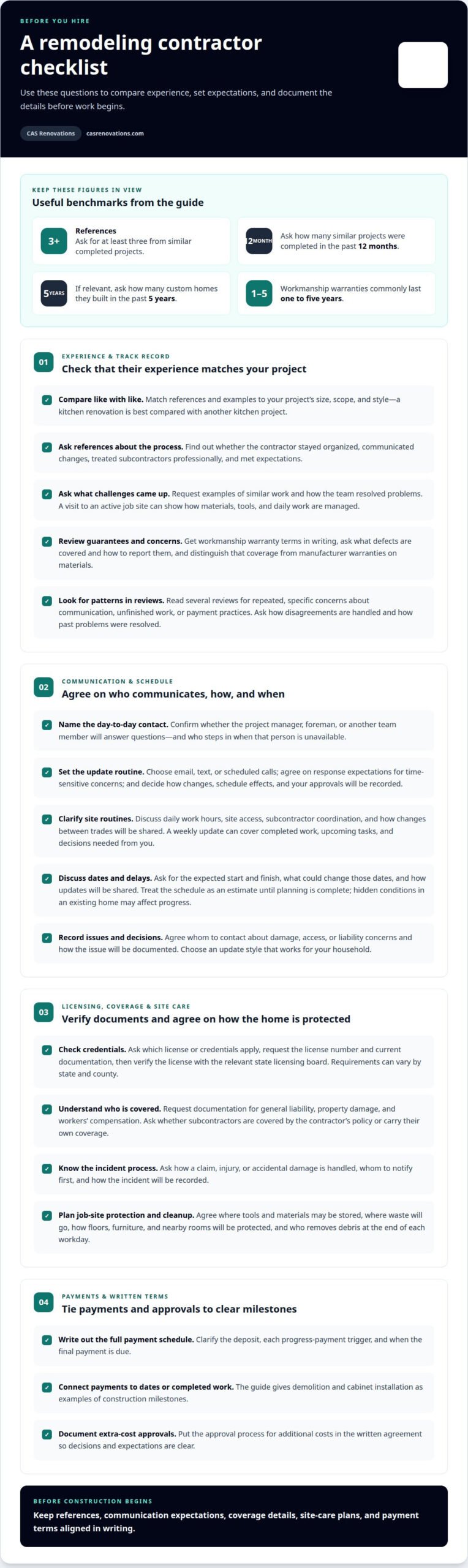
A contractor’s references can tell you more than a polished portfolio. Ask for at least three references from similar completed projects, then use the conversation to understand how the work was organized, how communication went, and whether the finished result met expectations. These are among the most useful questions to ask a remodeling contractor before you hire.
It’s reasonable to want clear answers before inviting a construction team into your home. A well-planned conversation can help you understand who will manage the work, how updates will be shared, what licensing and insurance documentation to discuss, and how payments will be scheduled. This guide brings those topics together, along with practical questions about timelines, permits, job-site care, and handling unexpected issues. With the details in writing and expectations aligned, you can make your decision with greater confidence and begin the project on a steadier footing.
Key Takeaways
- Use references from comparable projects to learn how a contractor organizes work and follows through.
- Agree on a main point of contact and a clear rhythm for project updates before work begins.
- Discuss relevant licensing and insurance documentation, including coverage for workers and the work itself.
- Put deposits, progress payments, approval for extra costs, and final-payment timing in the written agreement.
1. What questions should I ask a general contractor before hiring them?
Ask for at least three references from similar completed projects. A kitchen renovation, for example, is best compared with another kitchen project, not an unrelated exterior job. Ask each reference whether the contractor stayed organized, communicated changes, and treated subcontractors professionally. Their answers can reveal details a finished portfolio cannot.
Next, ask how many similar projects the contractor completed in the past 12 months. Request examples that match your project’s size, scope, and style, then ask what challenges arose and how the team resolved them. If custom-home experience is relevant, ask how many custom homes they built in the past 5 years. A visit to an active job site can also show how materials, tools, and daily work are managed.
Ask the contractor to explain their process from planning through completion, including who handles permits and coordinates inspections. Clarify which subcontractors may work in your home and how their work is supervised. A long-running business should have a traceable record, but years in business alone don’t show whether its experience fits your renovation. Match the examples and references to the work you’re planning.
What warranties and workmanship guarantees should a remodeling contractor provide? Workmanship warranties commonly last between one and five years. Ask what defects are covered, how to report a concern, and for the terms in writing before construction begins. Also distinguish workmanship coverage from manufacturer warranties on materials, which vary by product maker.
How do you check remodeling contractor complaints and reviews? Read several reviews, looking for specific, repeated concerns about communication, unfinished work, or payment practices rather than relying on one comment. Ask the contractor how they address disagreements and invite references to describe how any problem was resolved. The National Association of the Remodeling Industry is also a place to check for local remodeling contractor members.
2. Communication and points of contact
Before hiring a general contractor, identify who will answer day-to-day questions. Ask whether that will be a project manager, foreman, or another team member, and who steps in if they are unavailable. Knowing key team members’ names and roles helps prevent instructions from getting lost between the office and the job site.
Agree on a communication method and schedule before work begins. Decide whether routine updates will arrive by email, text, or scheduled calls, and how quickly to expect a response to a time-sensitive concern. Ask who will explain changes, describe their effect on the schedule, and record your approval. Clear records help everyone follow the same decisions.
Discuss daily work hours, site access, and how schedule updates will be shared. A weekly update can cover completed work, upcoming tasks, and decisions needed from you. Ask how the supervisor coordinates subcontractors and communicates changes between trades. Clarify whom to contact and how issues involving damage, access, or liability will be documented.
What is the project timeline, and how are delays handled? A schedule is an estimate until the project is fully planned, and hidden conditions in an existing home may affect progress. Ask the contractor to explain the expected start and finish, what could change those dates, and how updates will be communicated.
Make the plan suit the household. If you prefer a brief written summary after each site meeting, agree on that approach; if you’re often unavailable during work hours, set a reliable way to reach you. For a kitchen renovation, discussing project communication and planning can help establish clear expectations before work begins.
3. Licensing and insurance
Ask which license or credentials apply to the work, then request the contractor’s license number and current documentation. Requirements can vary by state and county, so confirm the license through the relevant state licensing board. Ask whether any certification relates directly to your project’s scope, and what training or qualifications subcontractors bring to their work. A clear answer should identify the credential and who holds it.
Ask for documentation of general liability coverage, property damage coverage, and workers’ compensation insurance. These coverages relate to damage or loss connected with work and job-site injuries. Ask whether subcontractors are covered through the contractor’s policy or carry their own coverage. The answer should explain how coverage applies to everyone working in your home.
How do you verify a remodeling contractor’s license, insurance, and references? Request the license number and current insurance certificates, then verify the license with the state licensing board and confirm the documents show relevant coverage. Contact references for comparable projects and ask about communication, follow-through, and how concerns were handled.
Ask how the contractor handles a claim, injury, or accidental damage, and whom to notify first. Clarify whether you should contact the project lead or the office, and how the incident will be recorded. Knowing the process before construction starts helps you act promptly if an issue arises.
How will the contractor protect your home and manage cleanup? Agree on where tools and materials may be stored, where construction waste will go, and how the work area will be secured. Ask how floors, furniture, and nearby rooms will be protected, and who removes debris at the end of each workday. Include these details in the project plan.
4. Payment schedules
Among the questions to ask a remodeling contractor, clarify the deposit, each progress-payment trigger, and when the final payment is due. Get the schedule in writing and connect payments to due dates or completed construction milestones, such as demolition or cabinet installation. Clear milestones make it easier to understand how payments relate to the project timeline.
A remodeling contractor’s down payment generally ranges from 10% to 30% of the project cost; a downpayment of 10% to 20% is also common when hiring a general contractor. These are reported practices, not a universal deposit limit. Don’t pay the full project amount upfront. The Better Business Bureau advises homeowners against paying contractors completely upfront.
To compare bids fairly, check whether each estimate covers the same scope, materials, allowances, and included or excluded work. Compare how each proposal handles progress payments and additional expenses, too. An itemized estimate helps explain the final amount and makes differences between proposals easier to identify.
Ask how extra work is priced and approved before it begins. The contract should say that costs won’t exceed the agreed budget without your approval. A times-and-materials arrangement sets an hourly rate for contractor services, while other methods may use lump-sum, cost-based, or guaranteed maximum pricing. Understand how the chosen method handles changes and funds left over.
Ask whether you can retain part of the payment until the work is complete to your satisfaction. Discuss making final payment after completion and inspection, and consider written lien waivers as documentation of payment. Ensure the payment plan, estimate, and agreement use consistent project stages and terms.
To discuss how project scope and payment planning fit together, talk about your remodeling project.
CAS Construction & Renovations
CAS Construction & Renovations helps homeowners plan kitchen, bathroom, outdoor living, hardscaping, and whole-home renovations, with attention to craftsmanship, communication, and the details that shape daily life at home. If you’re considering a renovation, use these questions to discuss your goals, project scope, schedule, and expectations before work begins.
With more than 20 years of experience, the team manages kitchen, bathroom, outdoor living, hardscaping, and entire-home renovations. A thoughtful discussion can help clarify which improvements fit your home and what the next steps involve, without rushing your decision.
For a conversation about your remodeling plans, contact CAS Construction & Renovations.
Turn your plans into a clear starting point
A remodeling project is easier to discuss when you know what matters most in your home. Consider how you use the space now, what feels limiting, and what you want everyday life to look like after the work. A short list of priorities can keep decisions focused when practical needs and design preferences compete.
The questions to ask a remodeling contractor can lead to a more productive conversation about your goals, rather than simply comparing proposals. Bring your ideas, inspiration, and main concerns together, then discuss how they could shape a cohesive plan. You don’t need every detail settled before starting. A thoughtful first conversation can clarify the project’s direction and next decisions.
When you’re ready to talk through your home’s possibilities, contact CAS Construction & Renovations. A considered beginning can set the tone for a renovation that feels purposeful, personal, and well planned.
Frequently Asked Questions
Do You Have a List of References?
CAS Construction & Renovations receives projects through referrals, which can offer homeowners a personal perspective on working with the team. References are most useful when their completed project resembles yours in scope, such as a kitchen renovation rather than an unrelated project. Ask about the decisions that mattered to you, including how the finished space serves everyday needs and whether the work matched the original goals.
How Many Projects Have You Completed in My Area?
Local experience is most useful when it relates to the work you’re planning. CAS Construction & Renovations serves Beaverton, Tigard, Lake Oswego, Hillsdale, Hillsboro, and West Linn. For a useful comparison, consider whether examples involve a similar type of home improvement and scope. A project’s location offers context, but the details of the work matter more.
What questions should I ask a general contractor before hiring them?
Ask how the proposed work will be organized, who will oversee it, and how decisions will be documented. For a bathroom renovation, clarify how design recommendations, material choices, and construction steps fit together. Ask how changes to the agreed scope are handled and communicated. These questions help turn broad ideas into a shared understanding of the project.
When would you be able to start?
The start date is set through planning conversations about your goals, design recommendations, materials, and timeline. CAS Construction & Renovations follows four steps: Free Consultation, Transparent Planning, Construction Phase, and Final Walkthrough. This process gives the project a defined planning stage before construction. For kitchen or bathroom remodeling, bring your priorities and timing needs to the planning conversation.
Are You Licensed for This Type of Project?
CAS Construction & Renovations is licensed, bonded, and insured in Oregon. Its Oregon CCB license number is 206522, active since 2015. Licensing requirements can vary by state and county, so homeowners should distinguish the contractor’s license from other credentials or insurance documents. For a project in Oregon, the license number and stated status provide specific details about the company’s licensing and coverage.
Are any of your company’s employees certified?
CAS Construction & Renovations is licensed, bonded, and insured in Oregon. These business credentials are distinct from individual employee certifications, which relate to a specific person and qualification. If a credential is relevant to particular work, ask which credential applies and who holds it. This distinction helps homeowners understand what a company-level license establishes and what an individual certification represents.