
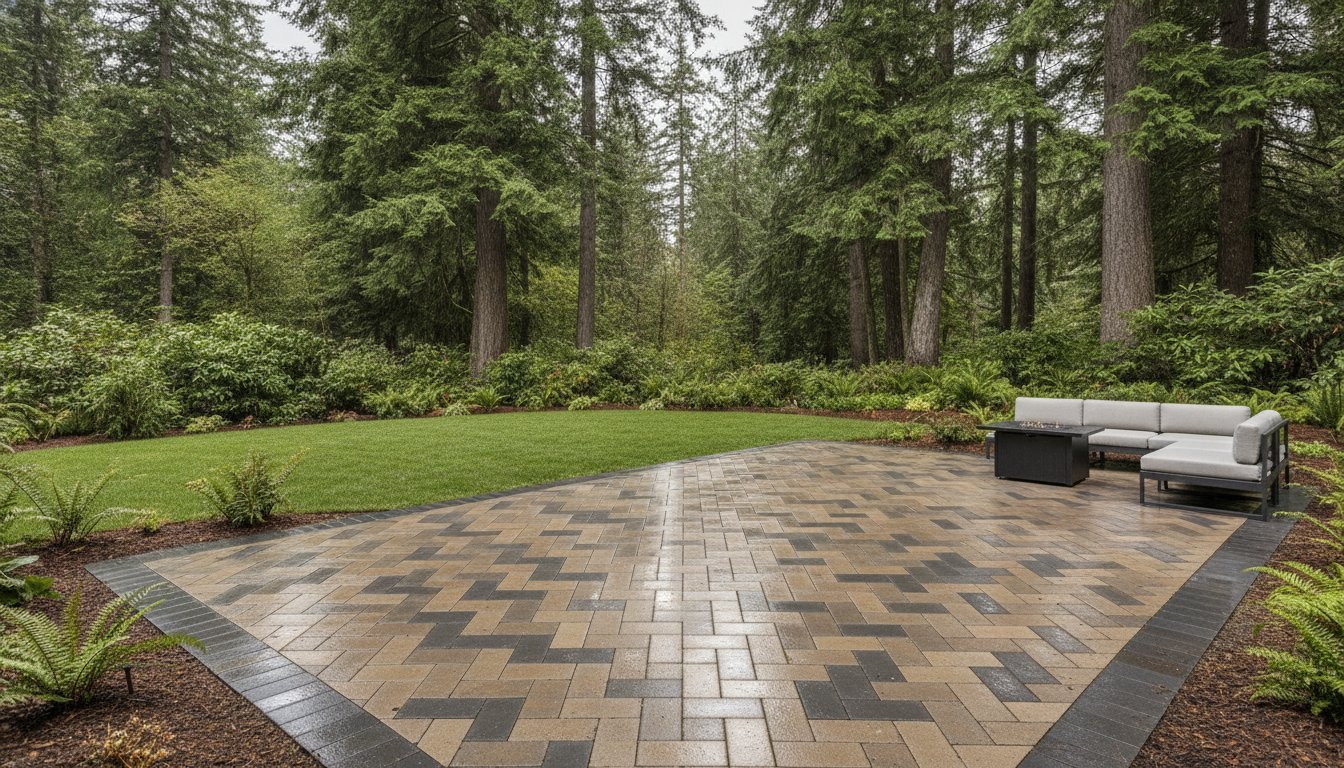
In Beaverton, choosing between a herringbone or a running bond layout isn’t just a matter of style; it’s a critical engineering decision that dictates whether your outdoor space thrives or sinks during a typical Oregon winter. Most homeowners start their project by browsing for beautiful aesthetics, but they quickly feel the weight of local challenges like saturated clay soil and relentless moss growth. It’s natural to worry about your investment shifting underfoot or becoming a maintenance burden after only a few seasons of rain.
This guide will help you discover the best patio paver patterns Beaverton has to offer, ensuring your new space balances Pacific Northwest beauty with the structural integrity needed for our specific climate. You’ll learn how the right layout can actually improve drainage and load distribution while reflecting 2026 trends like warm taupe tones and modern geometric shapes. We will look at which patterns fit your specific yard size and how professional craftsmanship prevents the common sinking patio trap. By the end, you’ll have a clear plan for a low-maintenance, high-value outdoor living area that feels like a natural extension of your home.
Key Takeaways
- Learn how to combat Beaverton’s clay soil and heavy rainfall by choosing layouts that distribute weight and manage water runoff effectively.
- Compare the most popular patio paver patterns Beaverton residents are choosing in 2026, from high-durability herringbone to modern, space-expanding running bond.
- Discover how intentional design choices, like multi-size paver systems, can naturally hide minor ground shifts and maintain a level surface over time.
- Explore ways to define your outdoor space into “rooms” using contrasting borders, fire features, and integrated outdoor kitchens.
- Understand the critical role of professional site preparation and excavation in protecting your investment from the common “sinking patio” trap.
Why Patio Paver Patterns Matter for Beaverton Homeowners
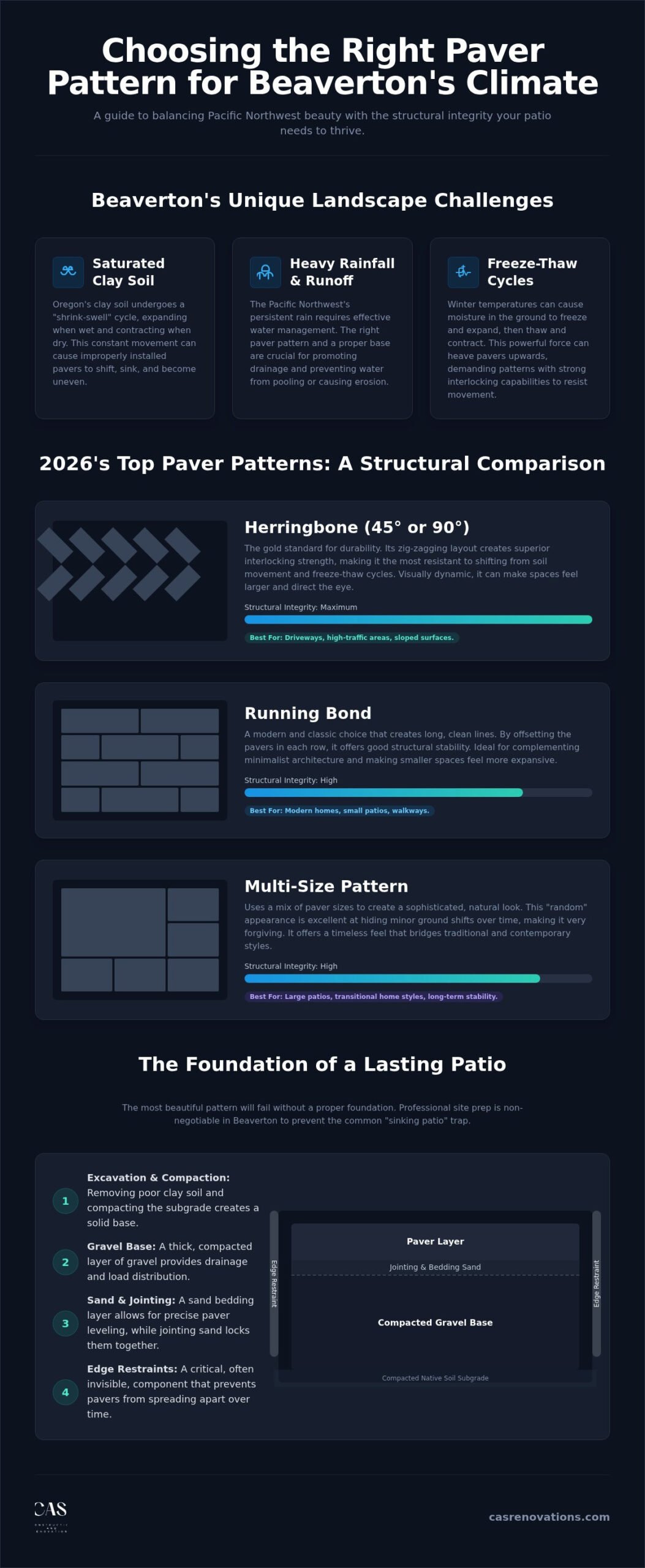
Beaverton homeowners face a unique set of landscape challenges that most national design blogs simply don’t account for. Our region’s clay-heavy soil is notorious for its “shrink-swell” cycle, expanding during our wet winters and contracting during the dry summer months. This constant movement can wreak havoc on a poorly planned outdoor space. Selecting the right patio paver patterns Beaverton residents need is more than an aesthetic choice; it’s a structural necessity. The pattern determines how weight is distributed across the surface and how well the stones resist shifting over time.
At CAS Construction, we approach the design-build process with a focus on longevity. We’ve seen too many patios in Washington County fail because the layout didn’t account for local topography. A well-chosen pattern doesn’t just look good; it adds measurable value to your home. It ensures that your investment remains a level, functional asset for entertaining rather than a drainage liability that requires constant repair.
Matching Patterns to Beaverton Architectural Styles
The architectural diversity in our community requires a tailored approach to hardscaping. For the classic Pacific Northwest Craftsman homes found in many of our established neighborhoods, a modified herringbone or a basketweave pattern respects the artisan, wood-heavy aesthetic. These patterns feel grounded and traditional.
In contrast, new constructions in areas like South Cooper Mountain often lean toward modern, minimalist designs. Large-format pavers in a linear or running bond layout complement these sleek lines perfectly. For neighborhoods like West Slope or Vose, we often recommend timeless, multi-size patterns. These “random” layouts provide a sophisticated look that bridges the gap between old-world charm and contemporary precision, making even a modest backyard feel like a high-end retreat.
The Aesthetic vs. Structural Balance
It’s easy to fall in love with a photo in a magazine, but “pretty” patterns can lead to structural failure if they aren’t engineered for our climate. A pattern’s primary job is to create an interlocking surface that stays put. Understanding Paver basics and history reveals that segmental paving was originally designed to flex without cracking. This flexibility is essential in Oregon.
The longevity of your chosen pattern depends on two invisible factors: jointing sand and edge restraints. Without a professional touch, even the most expensive stones will eventually drift or sink. This is why working with experienced outdoor living space builders in Beaverton is so important. We ensure that your design is backed by a foundation that exceeds local codes, protecting you from the common “sinking patio” trap that occurs when aesthetics are prioritized over engineering.
The Most Popular Patio Paver Patterns in 2026
In 2026, we are seeing a distinct shift in Beaverton backyards toward warmer, more inviting color palettes like soft taupe and sandstone. These tones require a thoughtful layout to truly shine. Selecting from the various patio paver patterns Beaverton homeowners have available isn’t just about what looks good in a catalog; it’s about how those shapes interact with your specific landscape. While some layouts prioritize a nostalgic, old-world feel, others are engineered specifically to handle the heavy foot traffic of a busy summer hosting season.
The Herringbone: Strength Meets Style
The Herringbone pattern remains the gold standard for both durability and visual impact. Whether set at a 45-degree or 90-degree angle, this layout is prized for its superior interlocking strength. The zig-zagging interlocking mechanism of a Herringbone layout creates the most resistant surface against shifting during Oregon’s intense freeze-thaw cycles. Beyond its structural benefits, it acts as a powerful visual tool. We often use the directional lines of the Herringbone to draw the eye toward a specific focal point, such as a custom fire feature or a scenic view of the valley.
This pattern is also highly effective when considering environmental impact. Using high-quality materials in a stable layout aligns with recommendations from the EPA on permeable pavement benefits, as it helps manage the heavy rainfall we experience in Washington County. It’s a choice that looks sophisticated while working hard to protect your property from runoff and soil erosion.
Running Bond and Stack Bond: The Modern Choice
For those who prefer a clean, contemporary aesthetic, the Running Bond and Stack Bond patterns are the top contenders. Running Bond is particularly popular because it mimics the look of traditional brickwork but can be scaled up with large-format pavers to make a small patio feel significantly larger. Because of its simple linear nature, the Running Bond pattern significantly minimizes material waste during the installation process, making it an efficient choice for large-scale projects.
Stack Bond, where pavers are aligned perfectly in both directions, offers a grid-like appearance that complements minimalist architecture. However, this layout requires precision craftsmanship. Because there is no offset to hide imperfections, every line must be perfectly straight to avoid a messy finish. If you are ready to see how these modern designs translate to your own backyard, our team at CAS Construction & Renovations is here to help you navigate the selection process.
Other timeless options include the Basketweave, which evokes a sense of historical charm perfect for garden paths, and the European Fan. The Fan pattern adds a touch of old-world elegance, though it is often reserved for decorative insets or circular patio sections due to the complex cutting required. Each of these patio paver patterns Beaverton residents choose reflects a unique balance of personal taste and the practical needs of our Pacific Northwest climate.
Selecting Patterns for Oregon’s Wet Climate
Beaverton receives significant annual rainfall, which puts immense pressure on hardscaped surfaces. When our local clay soil becomes saturated, it loses its ability to support heavy loads, often leading to the shifting or sinking issues many homeowners fear. At CAS Construction, we combat this with a base-first philosophy. While the visible patio paver patterns Beaverton residents choose are important, they must work in harmony with a deep, meticulously compacted gravel foundation that exceeds standard expectations.
Interestingly, more complex, multi-size patterns act as a structural safeguard over decades. If the ground undergoes minor, natural settling, a random or multi-piece pattern hides these slight variations much better than a rigid, linear grid. To further protect the installation, we utilize borders and soldiers. These are pavers laid perpendicular to the main pattern to lock the edges in place. This reinforcement prevents the perimeter from spreading outward when the ground is soft and vulnerable to heavy rain.
Permeable Paver Patterns vs. Standard Layouts
In many parts of Washington County, managing water on-site is a priority. Permeable installations differ from standard ones by using wider joints filled with small aggregates rather than sand. This allows water to flow through the surface and into the ground. While a simple Running Bond is easy to install, a Herringbone pattern often provides better stability for permeable systems because it distributes weight across the water-logged base more effectively. Local Beaverton drainage regulations and lot coverage limits may also influence your design, especially for larger projects that impact how your property handles runoff.
Stability and Interlocking: Preventing “Paver Creep”
Paver creep is the gradual movement of stones away from each other, creating unsightly gaps where moss and weeds can take hold. In the Pacific Northwest, this is often caused by water lubricating the joints during heavy storms. Choosing a pattern with a high interlock factor is your best defense. Herringbone is the undisputed champion here, as the 90-degree angles prevent stones from sliding in any single direction. While large-format pavers are trendy for their modern look, they have fewer joints and less grip than smaller, traditional units. For larger stones, precision in the base preparation is even more critical to ensure they don’t tilt or rock when the soil beneath them is wet.
Designing Your Space: Beyond the Pattern
A truly functional outdoor space serves as an extension of your home’s interior, but achieving this requires more than just picking a layout from a catalog. Once you’ve selected your primary patio paver patterns Beaverton, the next step involves defining how you will actually use the area. We often recommend using contrasting borders to create “outdoor rooms.” By changing the color or orientation of the pavers at the edge of a seating area, you can visually separate a dining space from a lounge zone without needing walls or fences. This technique adds a level of sophistication that makes a single large patio feel like a multi-functional retreat.
Lighting is another critical element for our local climate. Since Beaverton sees sunsets as early as 4:30 PM during the peak of winter, integrated LED lighting can highlight the texture of your pavers and ensure the space remains safe and inviting year-round. This is particularly effective when used along the transition points where your patio meets a walkway or a garden bed. Seamlessly blending these hardscaped areas with your landscaping requires a steady hand and a clear plan for how the eye should move through the yard.
Creating Focal Points with Circular Patterns
Circular paver kits are excellent for anchoring a focal point like a fire pit or a round dining table. They break up the rigid lines of a standard backyard and create a natural gathering spot for family and friends. However, blending a circular kit into a linear layout, such as a Running Bond, is technically demanding. It requires precise radial cuts and a deep understanding of how to maintain the structural integrity of the surrounding stones. This level of detail is why professional residential remodeling project fees reflect the skilled labor necessary to execute these complex designs without compromising the longevity of the installation.
Color and Texture Selection in the PNW
In the Pacific Northwest, your patio will be wet for a significant portion of the year. It’s vital to choose colors that retain their beauty when damp. Darker charcoals and warm earth tones often look richer under a light drizzle, whereas very light grays can appear flat or washed out. Texture is equally important for safety. Choosing the right surface involves more than just picking a favorite look; you should consider how the environment interacts with the stone:
- Tumbled textures: These offer a rustic, aged look and provide excellent grip, making them ideal for high-traffic paths.
- Smooth finishes: Best for modern aesthetics, though they require careful consideration regarding slip resistance when wet.
- Slate-top pavers: These mimic natural stone and provide a high-end feel with built-in traction.
To create a cohesive look, we help you select palettes that complement your home’s existing siding and trim. This ensures the new hardscaping feels like it has always been there. If you’re ready to design a space that balances these intricate details with long-term reliability, contact CAS Construction & Renovations to start your project consultation.
The CAS Construction Approach to Paver Installation
Every successful hardscaping project begins with a conversation that maps your aesthetic vision to the unique topography of your property. We don’t just look at the surface; we analyze the slope, existing drainage patterns, and soil composition of your yard. This initial design consultation ensures that the patio paver patterns Beaverton homeowners select are compatible with the physical realities of their land. By planning for these variables upfront, we eliminate the guesswork and set the stage for a project that stays on schedule and within your expectations.
Our team treats the installation phase with the precision of a master craftsman. In Beaverton, the heavy clay soil requires a base that goes far beyond the minimum requirements. We follow excavation and base compaction standards that exceed local codes to ensure your patio never becomes a victim of the “sinking stone” syndrome. Our craftsmen treat every individual paver like a critical piece of a larger structural puzzle, ensuring tight joints and perfectly level surfaces. The process concludes with a meticulous final sealing and site cleanup, leaving your outdoor space protected and ready for its first signature Oregon rainstorm.
Professional Project Management for Hardscaping
We understand that the logistics of a major home project can feel overwhelming. That’s why we manage the entire process, including the electronic permit applications required by the city of Beaverton. Our team’s 20+ years of industry experience allows us to navigate local building requirements with ease, avoiding the delays that often plague less experienced contractors. We stand by the CAS guarantee of on-time delivery and transparent communication. You’ll always know exactly where your project stands, from the first scoop of soil to the final walkthrough.
Start Your Beaverton Patio Transformation
Requesting a consultation and estimate is the first step toward reclaiming your backyard. During our initial site visit, we’ll walk your property together to discuss your goals, look at material samples, and provide a clear timeline for the build. We take pride in being a local Beaverton owner-operated business, treating your property with the same respect we would our own homes.
Many of our clients find that a patio project is the perfect time to consider other interior updates. Whether you’re interested in a modern bathroom renovation in Beaverton or a full kitchen remodel, we can coordinate these efforts into a cohesive whole-home upgrade. This integrated approach ensures that your home’s value and functionality increase both inside and out. Contact us today to begin the journey toward a more beautiful, durable outdoor living space.
Transforming Your Outdoor Vision into Reality
Building a patio in the Pacific Northwest is an investment in your home’s future and your family’s quality of life. We’ve explored how the right patio paver patterns Beaverton homeowners choose can solve structural challenges while creating a beautiful space for entertaining. From the interlocking strength of a herringbone layout to the modern simplicity of a running bond, your choice dictates both style and stability. Success depends on a foundation that respects our local clay soil and high rainfall.
At CAS Construction & Renovations, we bring over 20 years of local experience and expert project management to every build. We handle the technical details and permitting so you don’t have to. Our commitment to quality craftsmanship and accountability (CCB #206522) ensures your patio remains a level, low-maintenance asset for decades. It’s time to stop worrying about shifting stones and start enjoying a perfectly drained, high-value outdoor retreat.
Ready to get started? Request a Free Consultation for Your Beaverton Patio Project today. We look forward to helping you design a space that feels like a natural, enduring extension of your home.
Expert Answers to Common Beaverton Hardscaping Questions
What is the most durable paver pattern for high-traffic patios in Beaverton?
The herringbone pattern at a 45-degree angle is widely considered the most durable option for high-traffic areas. Its unique interlocking geometry prevents individual stones from shifting or “creeping” under the weight of foot traffic or heavy furniture. This stability is particularly important for patio paver patterns Beaverton homeowners choose, as it helps the surface remain level despite the natural expansion and contraction of our local clay-heavy soil.
Do I need a permit for a new paver patio in Beaverton, Oregon?
In Beaverton, a building permit is typically not required for a ground-level paver patio that stays below 30 inches above the adjacent grade. However, if your design includes a large patio cover or a significant retaining wall, you may need to submit plans through the Beaverton Electronic Permitting System (BEPS). It’s always wise to verify current zoning setbacks and lot coverage limits with the City of Beaverton Permit Center before beginning excavation.
How much does a professional paver patio installation cost in 2026?
While individual project costs vary based on site conditions, industry data for 2026 shows professional installation typically ranges from $8 to $24 per square foot. Material choices significantly impact this total; concrete pavers are generally the most accessible, while natural stone sits at the higher end of the spectrum. Homeowners should also account for labor, which reflects the meticulous excavation and base preparation required for Oregon’s wet climate.
Which paver patterns make a small backyard look larger?
Running bond and large-format linear patterns are excellent choices for making a small backyard feel more expansive. By laying pavers in long, unbroken lines, you draw the eye across the space, creating an illusion of greater depth or width. Using patio paver patterns Beaverton residents often prefer, such as oversized rectangular stones, reduces the number of joint lines, which results in a cleaner, less cluttered aesthetic that opens up the area.
How do you prevent weeds from growing between pavers in the wet PNW climate?
Using high-quality polymeric sand is the most effective way to prevent weeds and moss in our damp environment. This specialized sand contains additives that harden when misted with water, creating a durable barrier that resists erosion and seed penetration. Combined with a slight slope for proper drainage and regular debris removal, this method keeps your joints clean and structural even during the peak of the rainy season.
Can I install pavers over an existing concrete patio in Beaverton?
The ideal window for patio installation in Oregon is between late spring and early fall, specifically from May through September. Dry weather is essential for proper soil excavation, base compaction, and the application of jointing sand. While we can work during smaller dry windows in the winter, the consistent warmth of summer ensures that polymeric sand and sealants cure correctly, providing the best possible finish for your investment.
How long does a typical paver patio installation take from start to finish?
A typical professional installation for a 300-square-foot patio usually takes between one and two weeks from the start of excavation to the final cleanup. This timeline accounts for the time-intensive process of removing old material, hauling in and compacting the gravel base, and the precision cutting required for complex patterns. Factors like site accessibility, weather conditions, and the inclusion of features like fire pits can extend this duration.