

The most expensive part of your Oregon kitchen remodel isn’t the high-end cabinetry or the stone countertops. It is often the “surprises” hiding behind your existing drywall that cause the most financial stress. It’s completely understandable to feel anxious about hidden costs or price changes once demolition begins. You want a beautiful home, not a project that feels like a moving target. We believe that a successful renovation starts with transparency and a plan that respects your investment.
In this guide, you’ll learn exactly how to budget for kitchen remodel success using a professional contractor’s framework. We’ll move past the guesswork to provide a clear, percentage-based breakdown of costs tailored to the 2026 Oregon market. You’ll gain a firm grasp on local labor expectations, the mandatory 12% state permit surcharge, and why a 15% contingency fund is your best friend. By the end, you will have the confidence to start a conversation with a builder, knowing your numbers are grounded in local reality rather than hope.
Key Takeaways
- Learn how to align your renovation scope with your home’s total value to ensure a balanced investment that protects your equity.
- Master how to budget for kitchen remodel success by applying a professional framework to cabinetry, materials, and labor ratios.
- Understand the specific permit regulations and contingency requirements unique to the Beaverton, Tigard, and Lake Oswego areas.
- Discover where to prioritize your spending for long-term durability and where you can safely trim costs without sacrificing aesthetic quality.
- Gain clarity on the differences between fixed-price and cost-plus contracts to choose the most secure financial path for your project.
The Baseline: How Much Should a Kitchen Remodel Cost in 2026?
Establishing a realistic starting point is the most critical step in your renovation journey. Many homeowners start with a specific dollar amount in mind; however, professional planners often look at the property value first. This ensures you don’t under-invest in a way that looks out of place or over-improve for your specific neighborhood. A kitchen that is too modest for a high-end home can be just as problematic for resale as a kitchen that is far too expensive for its zip code.
The 15% Rule Explained
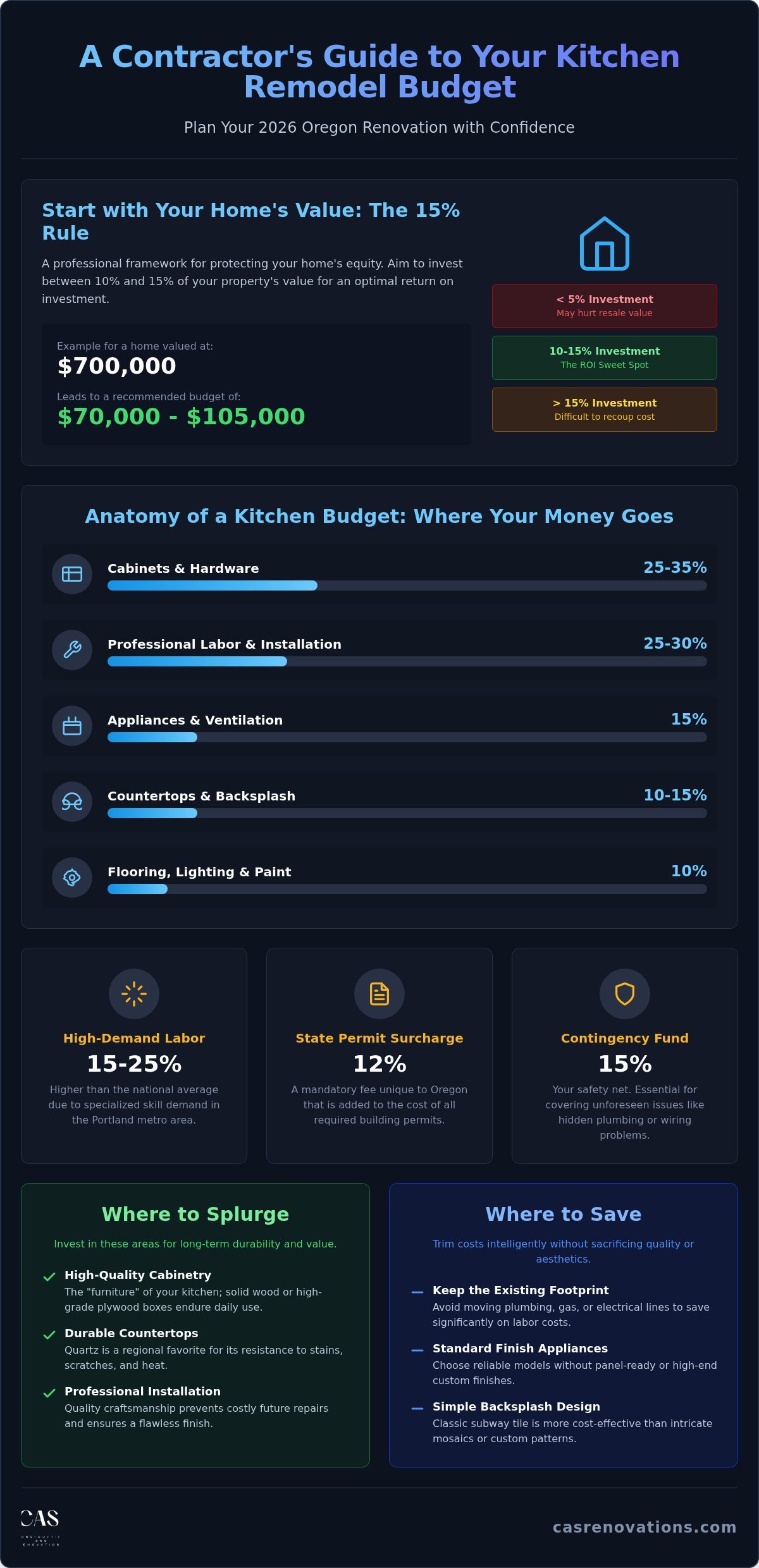
If you are wondering how to budget for kitchen remodel projects, the 10% to 15% rule is your primary guide. For a home valued at $700,000, a budget between $70,000 and $105,000 is typical for a full renovation. Spending less than 5% can actually hurt your resale value because the finishes may not meet the expectations of future buyers in areas like Beaverton or Lake Oswego. Conversely, exceeding the 15% mark might make it difficult to recoup your costs unless you plan to stay in the home for decades. The 15% rule serves as the industry standard for ROI-focused renovations, ensuring your investment aligns with your property’s market value.
Refresh vs. Full Custom Remodel
Your scope of work dictates the final price more than any other factor. A “pull-and-replace” project keeps the existing footprint, which saves significant money on plumbing and electrical work. However, once you decide to move a gas line or relocate a sink, the complexity increases. Older Hillsboro homes often present structural challenges when walls are removed. Opening a wall might reveal outdated wiring or plumbing that requires modern code updates. Consider these common scope levels:
- Cosmetic Refresh: Keeping the layout while replacing cabinets, counters, and appliances.
- Structural Reconfiguration: Removing walls to create an open-concept layout or moving primary utilities.
- Full Custom Expansion: Increasing the square footage of the kitchen through an addition or bump-out.
As we look at 2026, material procurement has become a logistical priority. Lead times for high-end cabinetry can be lengthy, so early planning is essential to avoid project delays. Strategic planning helps you understand how to budget for kitchen remodel expenses while accounting for these logistical shifts. Remember that price and value are not the same thing. A lower price might seem attractive today, but high-quality materials and professional installation provide better long-term home equity. Choosing durable quartz or solid wood cabinetry ensures your kitchen remains a functional asset for years to come.
The Anatomy of a Kitchen Budget: Cost Breakdowns
Once you’ve established your total investment ceiling, the next step is dividing that sum into functional categories. Think of your budget as a pie where the largest slices are reserved for the elements that provide the most utility and visual impact. Understanding these ratios helps you maintain control over your spending as you begin selecting specific finishes and fixtures.
A professional framework for a standard renovation typically follows these allocations:
- Cabinets and Hardware (25-35%): These are the “furniture” of your kitchen. They endure the most physical use and define the room’s architecture.
- Professional Labor and Installation (25-30%): This ensures your high-end materials are installed with precision. Quality craftsmanship pays for itself by preventing future repairs.
- Appliances and Ventilation (15%): This category balances modern tech features with long-term reliability.
- Countertops and Backsplashes (10-15%): Selecting materials that withstand daily use is vital for a hardworking kitchen.
- Flooring, Lighting, and Paint (10%): These are the finishing touches that define the overall aesthetic and mood of the space.
Why Labor Costs More in the Pacific Northwest
Trade demand in Beaverton and Lake Oswego remains high, which directly impacts your project’s bottom line. Skilled tradespeople in the Portland metro area often command rates that are 15% to 25% higher than the national average. This reflects the specialized expertise required for our region’s unique building requirements and the high standard of living. Investing in a lead carpenter and a dedicated project manager ensures these trades work in harmony. While “cheap labor” might seem tempting, it often leads to expensive corrective work that erodes your savings later on.
Material Selection and Budget Impact
When you are learning how to budget for kitchen remodel materials, consider the long-term maintenance costs alongside the initial price. Quartz has become a regional favorite because it is non-porous and requires no sealing, unlike natural granite. For cabinetry, semi-custom options often provide the best middle ground. They offer the flexibility to fit unique Oregon floor plans without the high price tag of a completely bespoke shop build. If you are feeling overwhelmed by these technical choices, discussing your goals with a kitchen remodeling professional can help clarify which allocations make the most sense for your specific home and lifestyle.
In 2026, high-efficiency appliance packages are also a major consideration. These units often require specific electrical or ventilation upgrades that should be accounted for early in the planning phase. By aligning your material choices with your functional needs, you create a space that is both beautiful and financially sound.
Navigating Oregon-Specific Costs and Hidden Expenses
Budgeting for a renovation involves more than simply tallying the cost of materials and labor. In the Pacific Northwest, our unique climate and aging housing stock introduce specific financial variables that often catch homeowners off guard. When you are learning how to budget for kitchen remodel projects in our region, you must account for the invisible elements that reside behind your drywall. Older homes in neighborhoods like Beaverton or Lake Oswego often hide decades of moisture exposure, outdated wiring, or slow plumbing leaks that only become visible during demolition.
We recommend a 20% contingency fund specifically for these “behind the wall” surprises. While a 10% buffer is standard for new construction, Oregon’s older residences require a more robust safety net. Discovering dry rot in the subfloor or realizing your electrical panel cannot support a modern induction range can quickly deplete a smaller reserve. By setting aside 20% from the start, you ensure that these discoveries are manageable hurdles rather than project-stopping crises. This approach maintains the momentum of your project and preserves your peace of mind.
Beaverton and Tigard Permitting Realities
Local regulations play a significant role in your overall investment. In the Portland metro area, a comprehensive kitchen permit involving building, electrical, and plumbing work typically costs approximately $1,729.26. It’s also vital to remember that the state of Oregon mandates a 12% surcharge on all building permits. If your vision includes an open-concept design, you should also factor in structural engineering fees. Removing a load-bearing wall to connect your kitchen and living space requires professional calculations to ensure the long-term stability of your home. These inspections and approvals can impact your timeline, so building a few weeks of “permit padding” into your schedule is a wise move. Before your first contractor meeting, reviewing a kitchen remodel estimate Beaverton homeowners checklist can help you anticipate permit costs and avoid common delays. Features like a kitchen island installation in Beaverton can also introduce additional permit requirements for countertop outlets and plumbing that should be factored into your budget from the start.
The Hidden Costs of Living Through a Remodel
The financial impact of a renovation extends beyond the construction zone. Since a full kitchen remodel can take anywhere from 6 to 12 weeks, you need a plan for daily life. Many families find success by budgeting for a temporary kitchen setup in a garage or dining room, but this still requires an investment in portable appliances or storage. You should also allocate funds for the “dining out” factor. Even with a microwave and a hot plate, you will likely spend more on takeout and prepared meals than usual. Additionally, if your project requires clearing out adjacent rooms, storage fees for furniture or large appliances should be a line item in your initial plan. Understanding how to budget for kitchen remodel logistics ensures that your daily routine remains as stable as possible while your home is transformed.
Strategic Prioritization: Where to Splurge and Save
Strategic prioritization is the difference between a kitchen that looks good and one that works perfectly for your lifestyle. When you are deciding how to budget for kitchen remodel priorities, it’s helpful to categorize items into foundational and aesthetic components. Foundational elements are difficult or expensive to change later, while aesthetic elements are often easier to update as trends shift. By focusing your spending on the bones of the room, you create a space that maintains its value even as styles evolve.
Splurge on high-use hardware and functional cabinet storage solutions. Soft-close hinges, pull-out spice racks, and heavy-duty drawer slides are the workhorses of your kitchen. These touchpoints affect your daily experience more than a luxury light fixture ever will. Conversely, you can often save on decorative lighting or secondary backsplash areas. These are jewelry for the room. High-quality, standard options look beautiful and are easily replaced if your tastes change in five years.
Another smart area to save is by selecting standard sizes for windows or doors. Custom fabrication adds weeks to your timeline and thousands to your bottom line. Instead, redirect those funds toward professional design and project management. Professional project management prevents costly mid-project changes by ensuring every detail is vetted before the first hammer swings. This foresight is the best way to ensure your project stays on track and within the limits you’ve set.
Investing in Craftsmanship over Trends
Quality installation is the silent hero of a successful remodel. A high-quality installation matters more than the brand of tile. Even the most expensive Italian marble will look poor if the layout is uneven or the grout lines are sloppy. Focus on timeless materials like quartz or white oak. These have a much higher long-term ROI than of-the-moment colors that may feel dated by 2030.
The “DIY” Trap in Professional Remodeling
Homeowner-led work often creates scheduling conflicts. If a DIY demolition reveals a structural issue, your professional crew might be delayed; this causes a ripple effect through the entire project. This can also lead to warranty issues if the substrate wasn’t prepared to professional standards. It only makes sense to handle small, non-structural tasks like final hardware installation. To ensure your investment is handled with the precision it deserves, contact our team for a professional project consultation today.
Budget Certainty: Fixed-Price vs. Cost-Plus Contracts
Choosing the right contract structure is the final piece of the puzzle when you are learning how to budget for kitchen remodel success. This decision determines how financial risk is shared between you and your builder. In an era where material costs can shift, having a clear agreement is the best way to protect your investment and maintain the stability of your project’s timeline.
The Fixed-Price model establishes a set fee for the entire scope of work before the first hammer swings. This approach is ideal for homeowners who want a hard ceiling on their spending. On the other hand, the Cost-Plus model involves paying for the actual costs of materials and labor plus a predetermined management fee. While Cost-Plus offers maximum transparency and flexibility for complex designs, it requires the homeowner to carry the risk of market fluctuations. Both models have their place, but your choice should align with your personal comfort level regarding budget fluidity.
Why CAS Construction & Renovations Favors Fixed-Price Projects
With over 20 years of industry experience, we’ve developed a meticulous estimating process that allows us to favor Fixed-Price projects. We believe this model provides the most reassurance for our clients in Beaverton and surrounding areas. Our deep roots in the community and active CCB license #206522 reflect a commitment to accountability. By performing the heavy lifting during the planning phase, we can offer a locked-in project fee that protects you from “budget-busting” surprises. If a change order is necessary, it’s handled through a formal, transparent process that keeps you in the driver’s seat of your financial plan.
Starting Your Budgeting Journey
Preparing for your first consultation in Lake Oswego or West Linn requires a bit of homework. We recommend arriving with a clear list of your functional priorities and any structural concerns you’ve noticed in your home. The foundation of a reliable estimate is a detailed Scope of Work document. This document should leave no stone unturned, listing everything from specific cabinet pull-outs to the exact type of subfloor preparation required. This level of detail ensures that the “price” you are quoted is a true reflection of the “value” you will receive.
When you sit down with a professional, ask how they manage their trade partners and what their process is for identifying hidden costs early. A trusted guide will have clear, methodical answers to these questions. If you’re ready for a grounded, professional perspective on your upcoming renovation, Request a free consultation and estimate from CAS Construction & Renovations.
Your Path to a Stress-Free Renovation
You now have a professional framework for understanding the financial landscape of a 2026 Oregon renovation. By applying the percentage-based rules and accounting for local permit surcharges discussed earlier, you’ve moved past the initial anxiety of the unknown. You understand that a successful project relies on strategic prioritization and a robust safety net to handle the unique challenges of our Pacific Northwest homes. These steps turn a daunting project into a manageable, structured plan that respects both your vision and your investment.
Choosing the right partner is the final step in learning how to budget for kitchen remodel success. With 20+ years of local Oregon experience, CAS Construction & Renovations specializes in providing the fixed-price contract options you need for true budget security. Our commitment to meticulous planning and on-time project management ensures your vision is realized without the common stresses of home construction. Plan your kitchen remodel with a Beaverton expert: Get a Free Estimate from CAS Construction & Renovations. We look forward to helping you build a space where your family can thrive for years to come.
Frequently Asked Questions
How much does an average kitchen remodel cost in Beaverton in 2026?
Average costs in Beaverton often reflect the broader Portland metro trends where a mid-range project typically falls between $30,000 and $75,000. High-end renovations in our area frequently range from $75,000 to $150,000 or more depending on the complexity. These figures depend heavily on your choice of materials and whether you are changing the room’s footprint. Working with an experienced local builder helps you navigate these variables to ensure your investment aligns with your home’s long-term value.
Is a 20% contingency fund really necessary for a new home?
A 10% contingency is generally sufficient for homes built within the last decade. While we recommend 20% for older Oregon residences to cover dry rot or outdated wiring, newer structures are less likely to hide major structural surprises. However, even in new construction, a small buffer is wise to cover minor design changes or material upgrades you might decide on mid-project. It’s about maintaining financial flexibility and peace of mind throughout the process.
Do I need a permit for a kitchen remodel in Oregon if I am not moving walls?
You generally don’t need a permit for purely cosmetic updates like painting, new countertops, or replacing hardware. However, Oregon code requires permits for any work involving electrical, plumbing, or mechanical systems. Even if you aren’t moving walls, installing a new sink location or upgrading your range’s ventilation will require professional oversight. This ensures your home remains safe and compliant with the 2026 Oregon Residential Specialty Code (ORSC).
How can I lower my kitchen remodel budget without sacrificing quality?
Keeping your existing kitchen footprint is the most effective way to lower your costs. Moving gas lines, sinks, or structural walls adds significant labor expenses to your project. You can also save by choosing high-quality semi-custom cabinetry rather than fully bespoke options. When you are learning how to budget for kitchen remodel projects, focus your spending on high-use items like hinges and drawer slides while opting for standard-sized windows or doors to avoid custom fabrication fees.
What is the most expensive part of a kitchen remodel?
Cabinetry and professional labor are almost always the largest expenses in a renovation. Cabinets typically account for 30% to 40% of the total budget because they serve as the room’s primary architectural furniture. Labor for skilled trades like carpenters, electricians, and plumbers follows closely at 25% to 35%. Because these elements define the room’s longevity, we recommend prioritizing quality here rather than cutting corners on installation or structural integrity.
How long does a typical kitchen renovation take in the Tigard area?
A typical full kitchen renovation in the Tigard area takes between 6 and 12 weeks once construction begins. This timeline accounts for demolition, utility rough-ins, and the precision required for cabinet and countertop installation. While cosmetic refreshes might move faster, structural changes or custom orders can extend the duration. We focus on meticulous project management to keep every phase on schedule and minimize the time your home is under construction.
Should I pay my contractor the full budget upfront?
You should never pay the full budget for your remodel upfront. A professional contractor will provide a clear payment schedule tied to specific project milestones, such as the completion of demolition or the delivery of cabinetry. This structure protects both the homeowner and the builder. It ensures that funds are allocated appropriately as the work progresses, maintaining a sense of mutual trust and accountability throughout the entire renovation process.
What is the difference between a fixed-price and a cost-plus contract?
A fixed-price contract sets a total cost for the project before work starts, while a cost-plus contract bills for actual expenses plus a management fee. Fixed-price agreements offer the most security for homeowners who want to avoid price fluctuations. Cost-plus models offer more flexibility for evolving designs but require you to assume more financial risk. Understanding these options is a key part of how to budget for kitchen remodel success with confidence.