
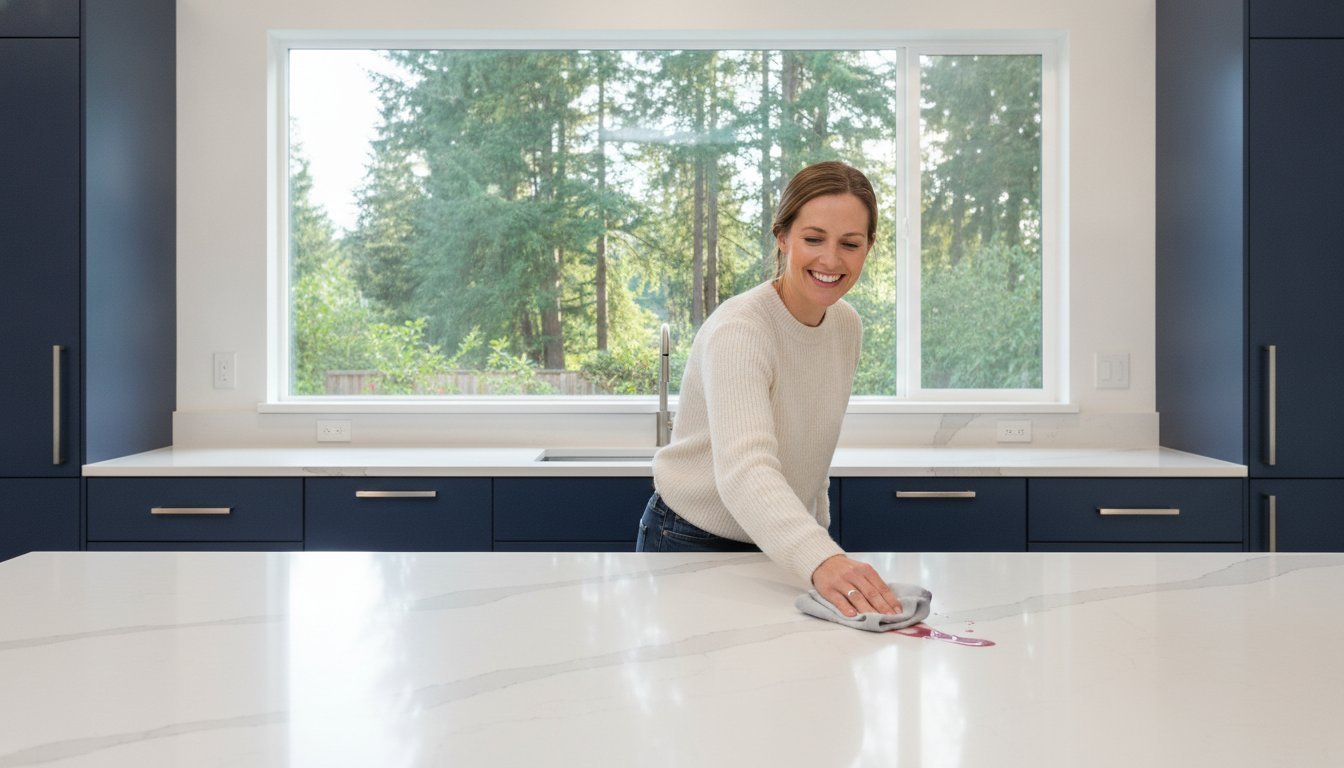
What if you could host a busy holiday dinner and leave the red wine spills until the next morning without a single moment of panic? Many homeowners in Beaverton find that the initial excitement of a kitchen remodel is quickly replaced by the stress of “babysitting” delicate surfaces. You want a high-end look, but you shouldn’t have to choose between beauty and low maintenance countertops that can actually handle a Tuesday night mess. It’s common to feel overwhelmed by the fear of permanent staining or the tedious requirement of annual resealing that many traditional stones demand.
In this guide, we’ll reveal the most durable, stain-resistant materials for 2026 that offer lasting value without recurring upkeep costs. We’ll explore how modern engineering has created surfaces that mimic natural stone while providing a simple wipe-down lifestyle. You’ll get a clear preview of the top-performing materials like quartz and porcelain, along with professional insights on how the right installation ensures your kitchen remains a source of pride rather than a source of work.
Key Takeaways
- Discover why quartz and porcelain are the leading choices for low maintenance countertops in 2026, balancing sophisticated style with daily durability.
- Identify the long-term financial benefits of non-porous surfaces by avoiding the “sealing cycle” and the need for expensive specialty cleaners.
- Learn how modern engineering allows for realistic stone aesthetics and improved heat resistance without the fragility of natural marble or granite.
- Protect your kitchen’s finish with a simple maintenance routine designed to combat the specific mineral buildup common in Beaverton homes.
- Understand how expert project management and precise installation prevent structural issues like seam failure and surface cracking.
Beyond the Surface: Why Low Maintenance is a Top Priority for Modern Kitchens
Choosing a surface for your kitchen remodel is about more than just picking a color you like. It’s about how you’ll feel in that space three years from now when the initial novelty has worn off. In 2026, we’re seeing a decisive shift toward low maintenance countertops as homeowners prioritize longevity and ease of use over traditional, high-maintenance materials. This movement isn’t about cutting corners; it’s about investing in a lifestyle where your home serves you, rather than the other way around.
It is a common misconception that any surface can be entirely maintenance-free. Even the most resilient materials require a basic wipe-down after meal prep. However, the goal of a well-chosen surface is to eliminate the deep-cleaning marathons and the constant worry about permanent damage from a spilled glass of juice or a forgotten coffee ring. High-maintenance stones often come with a “maintenance tax.” This includes the recurring cost of professional-grade sealers and the necessity of pH-neutral cleaners that won’t etch the surface. Over a decade, these small expenses and the time spent applying them add up significantly, often outweighing the initial savings of a cheaper material.
In the Beaverton area, our local water quality can also impact your surfaces. Hard water minerals often leave a hazy residue on dark, porous stones that require aggressive scrubbing or specialized chemicals to remove. Selecting a non-porous material simplifies this struggle, allowing a simple damp cloth to do the work. Modern solutions like Engineered stone provide a dependable alternative by combining crushed stone with specialized resins to create a surface that is virtually impenetrable to both moisture and minerals.
The Problem with Porous Stones
Natural stones like marble are essentially sponges on a microscopic level. Capillary action draws liquids deep into the stone, where they can bond with the minerals and create permanent discoloration. While some designers argue that the “patina” of a stained marble slab adds character, most busy families find it frustrating. For a household that actually uses its kitchen for heavy meal prep, these “high-fashion” choices often become high-effort burdens that require constant vigilance to prevent etching from acidic foods like lemons or tomatoes.
The Emotional Benefit of Durable Surfaces
A kitchen should be a place of relaxation, not a source of constant vigilance. When you aren’t worried about every drop of wine, you’re free to focus on the guests in the room. This reduction in “kitchen anxiety” is a significant reason why low maintenance countertops are becoming the standard for modern remodels. Choosing a durable finish also protects your long-term home value, ensuring the kitchen looks as pristine on the day you sell it as it did on the day it was installed. A low maintenance surface transforms the kitchen from a high-stakes work zone into a reliable sanctuary for family connection.
The Best Low Maintenance Countertop Materials for 2026
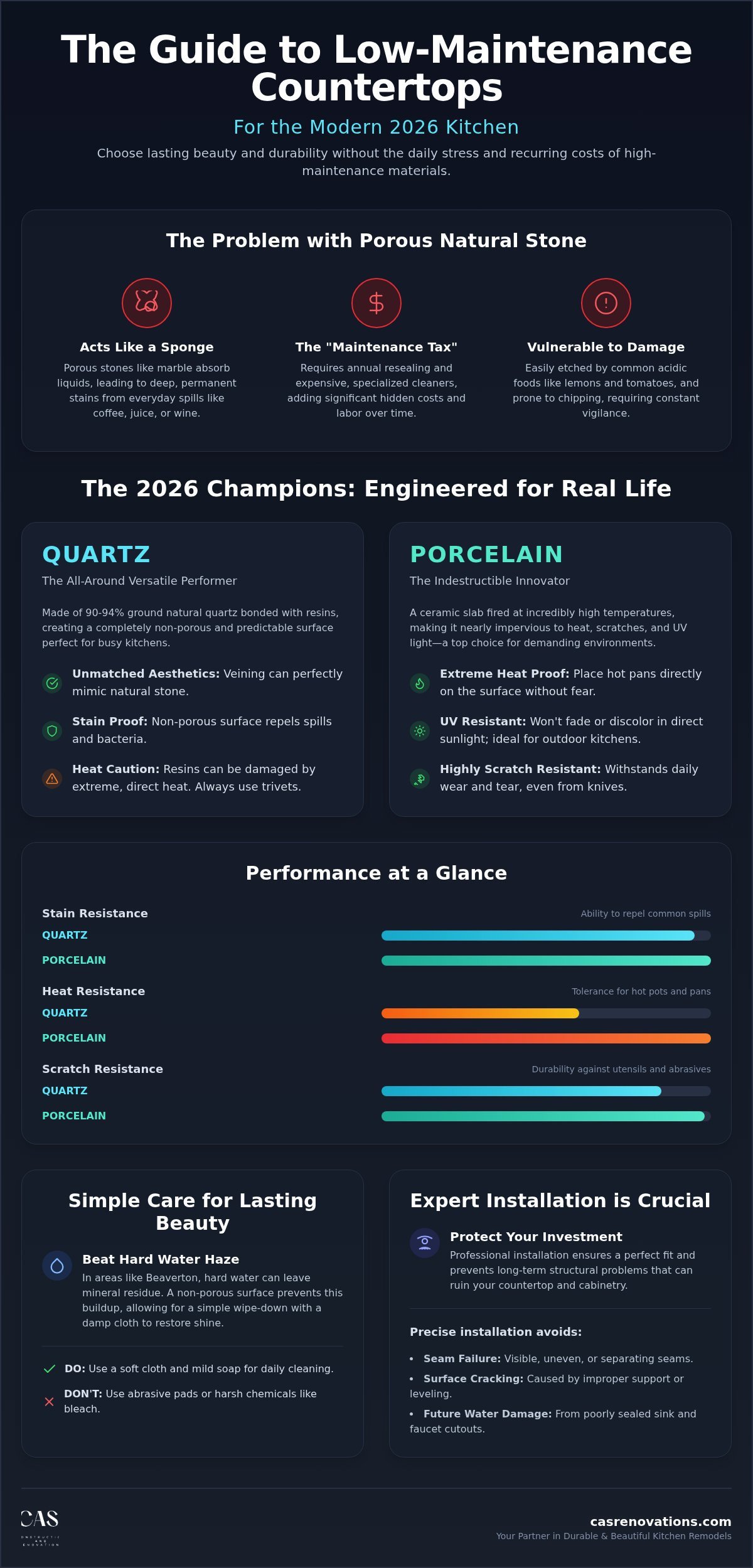
Selecting the right material is the most critical decision in your renovation journey. While many surfaces claim to be durable, only a few truly earn the title of low maintenance countertops by eliminating the need for periodic sealing and specialized care. In 2026, homeowners are moving away from high-stakes natural stones toward engineered surfaces that offer predictable performance. Quartz remains the primary choice for most indoor projects. It’s composed of roughly 90 to 94 percent ground quartz and 6 to 10 percent resins and pigments, creating a surface that is completely non-porous. You won’t need to worry about bacteria growth or deep-set stains from morning coffee spills.
Porcelain slabs have surged in popularity recently for those seeking even higher levels of thermal resistance. Unlike quartz, which can be damaged by extreme heat due to its resin content, porcelain is fired at incredibly high temperatures. This makes it nearly impervious to heat and UV rays. If your kitchen remodeling plans include an outdoor cooking area or a countertop that sits in direct sunlight, porcelain provides a level of stability that other materials cannot match. It’s essentially a giant, incredibly tough ceramic tile that resists scratches from even the sharpest kitchen knives.
Quartz vs. Porcelain: Comparing the Heavyweights
Quartz is the reigning champion for aesthetic variety. In 2026, the manufacturing process has advanced to the point where the veining in quartz is nearly indistinguishable from natural Calacatta marble. However, you must use trivets for hot pans. Porcelain offers superior heat resistance and can be used as a backsplash behind high-output ranges without fear of discoloration. While porcelain is more difficult to fabricate and requires a skilled hand for installation, its durability against thermal shock is unmatched. Both materials eliminate the “sealing cycle” entirely.
Secondary Options: Solid Surface and Recycled Glass
Solid surface materials, often acrylic-based, offer a unique benefit: they are completely seamless. This eliminates the small crevices where crumbs and moisture usually collect. If you manage to scratch a solid surface, a professional can often buff the mark out right in your kitchen. Recycled glass is another eco-friendly contender. It provides a vibrant, mosaic-like appearance and is surprisingly tough. While these options are less common than quartz, they offer specific maintenance profiles that suit homeowners who value a monolithic, easy-to-sanitize workspace. Stainless steel also remains a niche favorite for those who want a professional, “industrial-strength” kitchen that can be bleached and scrubbed without a second thought.
Performance vs. Style: Debunking Myths of Engineered Stone
There is a lingering perception that choosing utility means sacrificing soul. Some critics argue that engineered surfaces lack the organic depth of a slab pulled directly from a quarry. However, the technology powering 2026 manufacturing has fundamentally changed the conversation. You no longer have to settle for a pattern that looks like it was printed on plastic. Modern low maintenance countertops now feature through-body veining, where the colors and patterns run all the way through the material rather than just sitting on the surface. This creates a visual depth that rivals natural marble while maintaining the non-porous benefits we established earlier.
Another common myth is that these surfaces are completely indestructible. While they are incredibly tough, they aren’t magic. A heavy cast iron pot dropped on a sharp edge can still cause a chip. Similarly, the belief that you can place a 450-degree pan directly on quartz without consequence is a dangerous misunderstanding. Understanding these boundaries doesn’t make the material less valuable; it simply ensures you know how to protect your investment for decades to come. By acknowledging the limits of the material, you can enjoy its beauty without the stress of accidental damage.
The Evolution of Quartz and Porcelain Aesthetics
Book-matching is a technique once reserved for high-end marble, but it is now a standard option for porcelain and quartz. This allows for symmetrical, mirrored patterns that look stunning on large islands or waterfalls. You also have more choices in texture than ever before. While polished finishes remain popular for their classic shine, matte and “honed” finishes are gaining ground because they hide fingerprints and water spots more effectively. Choosing a slightly rounded edge profile rather than a sharp 90-degree angle is a small detail that significantly reduces the risk of accidental chipping during heavy meal prep.
The Reality of Heat and Impact Resistance
The resin used to bind quartz is a type of polymer, which means it has a specific melting point. Prolonged exposure to high heat can cause permanent discoloration or “thermal shock,” which leads to cracks. Porcelain is more resilient to heat, but it is still susceptible to impact damage. To keep your low maintenance countertops looking new, we always recommend using trivets and cutting boards. It’s a small habit that prevents the most common types of surface failure. Professional installation also plays a role here, as a perfectly level surface is less likely to experience the internal stress that leads to cracking over time.
Practical Care: How to Keep Your Surfaces Pristine
Maintaining your low maintenance countertops shouldn’t feel like a part-time job. The primary appeal of these modern materials is their simplicity. For daily upkeep, a 30-second wipe with a damp microfiber cloth and a drop of mild dish soap is usually all it takes to remove grease and dust. Unlike porous natural stones that require immediate intervention to prevent a permanent mark, quartz and porcelain give you the luxury of time. You can finish your meal and enjoy your evening, knowing the surface is protected by its own non-porous structure.
In Beaverton, we often deal with specific mineral levels in our local water that can leave a cloudy haze on dark or polished surfaces. This isn’t a permanent stain; it’s a mineral deposit left behind as water evaporates. To prevent this buildup, get into the habit of drying your counters with a clean towel after your daily cleaning. This simple step stops the minerals from bonding to the surface, keeping your finish crystal clear without the need for aggressive scrubbing or chemical descalers. If you are unsure which material best suits your daily habits, our team at CAS Construction & Renovations can provide a personalized assessment during your kitchen design phase.
Every homeowner should keep a “Forbidden List” of items that never touch the counter. This includes high-strength bleach, oven cleaners, and abrasive scouring pads. These products can chemically react with the resin binders in quartz or dull the factory polish on porcelain. If you encounter a stubborn mark like dried craft glue or a scuff from a heavy pot, use a plastic putty knife to gently lift the residue. Avoid metal scrapers, as they can leave “metal marks” that are much harder to remove than the original mess.
The Right Tools for the Job
Microfiber is superior to traditional sponges because it traps microscopic particles rather than just moving them around. While many people reach for vinegar as a “natural” cleaner, it’s actually too acidic for long-term use on many durable surfaces. Acidic cleaners like vinegar or lemon juice can break down the resin binders in engineered stone or etch the surface of natural stone over time, leading to a permanent loss of luster. Stick to pH-neutral cleaners specifically labeled for stone or quartz to ensure the surface stays vibrant.
Long-term Care for “Low Maintenance” Granite
Some varieties of granite are naturally dense enough to be marketed as low maintenance. Even these hardy stones may eventually require a fresh coat of sealer to maintain their integrity. You can easily check this with the water-drop test. Place a few drops of water on various parts of the counter. If the water beads up, your seal is strong. If the water soaks in and darkens the stone within 10 minutes, it’s time for a professional reseal to prevent deep-set staining. Transitioning from high-maintenance habits means trusting your materials while staying observant of these subtle changes.
Integrating Durable Surfaces into Your Beaverton Remodel
Choosing the right slab is only half the battle. The true longevity of your low maintenance countertops depends heavily on the structural integrity of the cabinets beneath them and the precision of the installation. Even the most resilient porcelain or quartz can fail if the sub-structure isn’t perfectly level. At CAS Construction & Renovations, we act as your expert guide through this entire process. We don’t just help you pick a color; we evaluate how a specific material will perform in the context of your daily routine and the unique layout of your home.
Professional project management is the hidden factor that determines whether your kitchen remains beautiful for decades or develops issues within the first few years. Poor seam placement is a common culprit for cracking, especially near heavy sinks or cooktops. We prioritize meticulous planning during the fabrication phase to ensure that seams are placed in low-stress areas and bonded with color-matched resins that disappear into the pattern. This level of detail prevents the small structural failures that often lead to costly repairs down the road. Integrating these durable surfaces into a broader kitchen remodeling project requires a steady hand and a clear plan for every phase of construction.
Expert Installation in Beaverton and Tigard
Local expertise is vital when dealing with high-end materials that require specialized handling. Our team brings over 20 years of industry experience to every Beaverton home, backed by our CCB license #206522. We manage the entire procurement process, from selecting the slab at the local showroom to the final polish in your home. We understand that a renovation is a significant investment in your stability and comfort. Because of this, we maintain a strict commitment to on-time project management. We respect your property and your schedule, ensuring the transition to your new kitchen is as quiet and organized as possible.
Next Steps for Your Kitchen Transformation
Visualizing your new space is the most exciting part of the journey. Modern materials allow us to coordinate your countertops with custom cabinetry and intricate backsplashes to create a cohesive, high-end look that doesn’t require a professional cleaning crew to maintain. Our approach is built on mutual trust and personalized service. We listen to your concerns about staining and upkeep, then provide a solution that removes those stresses from your life. When you’re ready to move from inspiration to action, we’re here to lead the way. Schedule your free Beaverton kitchen consultation with CAS Construction to begin planning a space that offers both lasting beauty and the functional ease you deserve.
Build a Kitchen That Serves Your Lifestyle
Investing in your home is about more than just aesthetics; it’s about creating a space that supports your daily life without adding to your to-do list. By choosing low maintenance countertops like quartz or porcelain, you effectively eliminate the stress of staining and the chore of annual sealing. We’ve explored how these modern surfaces withstand the rigors of heavy meal prep while maintaining their high-end character. Remember that the longevity of these materials depends on precision during the installation phase, where structural support and level surfaces prevent future cracking.
At CAS Construction & Renovations, we bring over 20 years of local experience and our CCB license #206522 to every project we manage. We specialize in high-end finishes that balance beauty with practical durability, ensuring your investment stands the test of time. Your kitchen should be a place for gathering and joy, not a source of maintenance anxiety. Ready to simplify your kitchen? Contact CAS Construction for a free estimate in Beaverton. We look forward to helping you create a beautiful, functional sanctuary that you’ll be proud to call home for years to come.
Frequently Asked Questions
What is the most heat-resistant low maintenance countertop?
Porcelain slabs are the most heat-resistant choice for low maintenance countertops in 2026. They’re fired at temperatures exceeding 2,000 degrees Fahrenheit, which makes them nearly impervious to thermal shock and direct heat. While you should still use trivets to protect the underlying cabinetry from heat transfer, porcelain won’t burn or discolor from a hot pot like resin-based materials might.
Do quartz countertops really never need to be sealed?
Quartz countertops never require sealing because they’re engineered to be non-porous. The manufacturing process uses resin binders to fill every microscopic gap between the ground stone particles, creating a solid, impenetrable barrier. This means you won’t have to deal with the recurring maintenance costs or the chemical odors associated with the annual sealing required by natural stones like marble or granite.
Can I use porcelain countertops for an outdoor kitchen in Oregon?
Porcelain is an excellent choice for outdoor kitchens in the Pacific Northwest. It’s UV-resistant and won’t fade in the sun, and its non-porous nature makes it resistant to the freeze-thaw cycles we experience in the Beaverton area. It’s a stable surface that handles our damp climate without warping or staining, providing a dependable workspace for year-round outdoor entertaining.
How do I remove hard water stains from my quartz countertops?
For hard water mineral buildup, use a pH-neutral stone cleaner and a soft microfiber cloth. Avoid the temptation to use vinegar or lemon juice, as these acids can eventually dull the factory polish. Drying your counters with a clean towel after each use is the most effective way to prevent these mineral spots from bonding to the surface in the first place.
Is granite considered low maintenance if it is pre-sealed?
Pre-sealed granite is more durable than raw stone, but it isn’t truly maintenance-free. Even with a factory seal, granite remains a natural, porous material that can eventually absorb liquids if the seal wears thin over time. For a “set it and forget it” experience, engineered stones like quartz remain the superior choice for homeowners who want to avoid the “sealing cycle” entirely.
Which countertop material is best for preventing bacteria growth?
Quartz and porcelain are the best materials for hygiene because they’re completely non-porous. Bacteria and mold need tiny pores or cracks to hide and grow, which these engineered surfaces simply don’t have. This makes them an ideal choice for busy families who prioritize food safety and want a prep area that stays clean with a simple daily wipe-down.
What is the most affordable low maintenance countertop option in 2026?
Solid surface materials generally offer the most affordable entry point for durable, easy-to-clean counters. While they don’t have the same heat resistance as porcelain, they’re seamless and easy to repair if a scratch occurs. Entry-level quartz options also provide a cost-effective way to achieve a high-end stone look without the daily stress and upkeep of natural marble.
Do matte finishes require more maintenance than polished ones?
Matte finishes don’t necessarily require more work, but they do show different types of marks. While a polished finish highlights water spots and dust, a matte or “honed” surface is more likely to show oil-based smudges from fingertips. Both are easy to clean, so your choice should depend on which visual style best complements your kitchen’s overall design and lighting.